

FAQs

FAQs

All cancelled orders, even if not shipped, are subject to a minimum $100.00 or 10% cancellation fee, whichever amount is greater.
Cancellations within 48 hours of placing the order will receive a full refund.

Our team processes orders within the first two business days after receiving the order. When an order is cancelled, this means that more time and effort has been spent on processing your order before cancellation, hence the cancellation fee.

If orders have been delivered, a minimum of 15% restocking fee will be charged to orders that are returned or exchanged. This restocking fee may vary based on the material ordered. Restocking may not be an option for custom engineered orders.

FAQs

CAISS allows our clients to arrange their own freight service via their own shipping account or freight vendor (Freight Collect).

When CAISS sends clients a quotation, CAISS will include "Client Arranged Shipping" at zero cost in the quotation to let the client know that they will be arranging their own freight service to pickup and deliver the items to the shipping address provided. Once your order is ready to ship, the order will be shipped and billed to the freight account provided.

Please keep your shipper's contact/account information handy as CAISS will be requesting this information from our clients at the time of processing.

FAQs

Many modular access stair systems use bolt-together components that allow for quick on-site assembly without the need for welding, helping reduce installation time and costs.

Yes. Most crossover stair bridge systems include integrated handrails, guardrails, and slip-resistant walking surfaces to enhance worker safety.
Yes. Fixed roof anchors should be inspected periodically in accordance with OSHA requirements, ANSI standards, and manufacturer recommendations to ensure continued safety and compliance.
Yes. Depending on the application, fold down ladders may include handrails, grab bars, slip-resistant rungs, safety cages, locking mechanisms, and fall protection compatibility.

FAQs

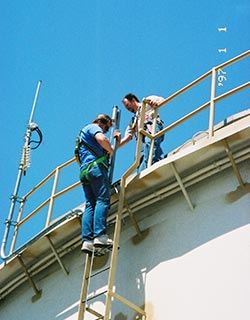
A cage can help with ladder climbing control, but OSHA has moved away from cages as the primary means of fall protection on taller fixed ladders. Existing cages may be allowed in certain situations, but OSHA’s fixed ladder rules require compliant solutions (ladder safety systems / PFAS) and include a long-term phase-out timeline for cages. OSHA

Visit: CAI Safety Systems Fixed Vertical Ladders

Many mobile fall protection systems are non-penetrating and do not require attachment to the building structure, helping preserve roof integrity and facility assets.

FAQs

Yes. Upon successful completion of the course requirements, participants receive a certificate demonstrating they have met or exceeded applicable OSHA and ANSI training requirements for their training level.

Many portable safety ladders are equipped with locking casters or wheel mechanisms that secure the ladder during use while allowing easy mobility when repositioning is required.
Yes. Regular inspections and maintenance are recommended to ensure ongoing safety, compliance, and proper system performance according to OSHA requirements and manufacturer guidelines.
Yes. Regular inspections are recommended in accordance with OSHA requirements, ANSI standards, and manufacturer guidelines to ensure continued safety and compliance.

FAQs

Yes. ANSI requires markings and labels on fall protection equipment to remain legible and securely attached throughout the service life of the equipment.

FAQs

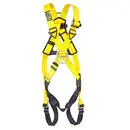
Yes. ANSI standards for personal fall arrest systems are based on the use of full-body harnesses rather than body belts for fall arrest applications.

FAQs

Yes, safety consultants can help businesses understand and meet applicable OSHA regulations and workplace safety standards.

FAQs

Yes. CAI Safety offers freestanding, non-penetrating guardrail systems that help protect workers while preserving roof integrity and avoiding roof penetrations.

Yes. CAI Safety offers self-closing industrial safety gates designed to automatically return to the closed position after use, helping maintain continuous fall protection.
Yes. CAI Safety offers OSHA-compliant fall protection systems, safety equipment, training programs, engineered solutions, and consulting services designed to help organizations improve worker safety and regulatory compliance.

FAQs

CAI Safety Systems Inc. offers fall protection systems, training, services, and equipment designed to support compliance with applicable ANSI and OSHA fall protection requirements.

FAQs

Yes. CAI Safety's training programs include instruction on applicable OSHA regulations and ANSI Z359 fall protection standards to help organizations maintain compliance.