








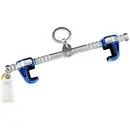

Crossover stair bridges are commonly used in manufacturing plants, warehouses, distribution centers, utility facilities, water treatment plants, chemical processing facilities, and industrial environments.
Crossover stair bridges improve worker safety, provide controlled access routes, reduce trip hazards, improve workflow efficiency, and help facilities comply with workplace safety requirements.
Crossover stair bridges are commonly manufactured from aluminum, galvanized steel, stainless steel, or other durable materials selected based on the application and environmental conditions.
Yes. Properly designed and installed crossover stair bridges can help facilities comply with OSHA requirements for safe access, walking-working surfaces, and fall protection.
Yes. Crossover stair bridges can be custom engineered to accommodate specific heights, widths, spans, load requirements, handrail configurations, and site conditions.
Yes. Many crossover stair bridges are designed for both indoor and outdoor environments and can be constructed using corrosion-resistant materials suitable for harsh weather conditions.
Yes. Most crossover stair bridge systems include integrated handrails, guardrails, and slip-resistant walking surfaces to enhance worker safety.
Industries that commonly use crossover stair bridges include manufacturing, food processing, energy, utilities, water treatment, transportation, logistics, chemical processing, and commercial facilities.
The appropriate crossover stair bridge depends on obstacle dimensions, required clearance, load capacity, available space, environmental conditions, worker traffic, and applicable safety regulations. CAI Safety can help determine the most suitable solution for a specific application.
Crossover Stairs
A crossover stair bridge is an elevated access system that allows workers to safely cross over pipes, conveyors, ductwork, equipment, or other obstacles while maintaining a designated walking path.