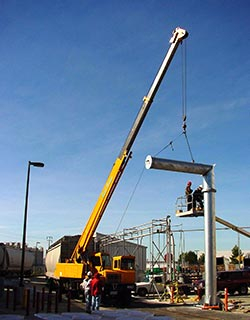
Recommended for: Managers, Immediate Supervisors of authorized persons, or Individuals working at heights. Includes Competent Person and Competent Inspector
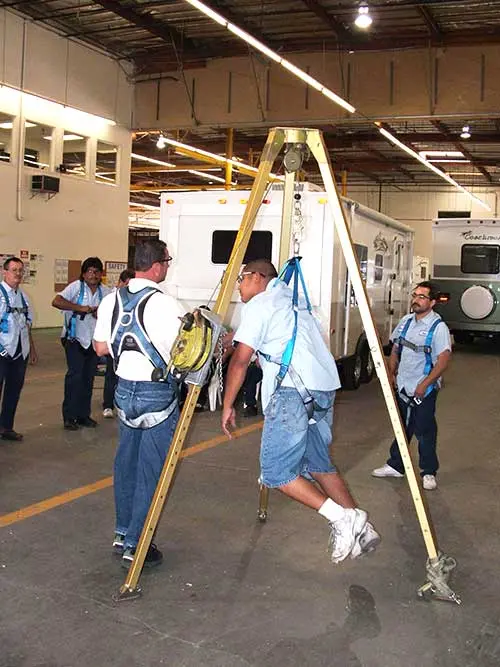
Recommended for: All individuals who are working at heights. Training required for employees who will be working first hand with the fall protection systems and devices
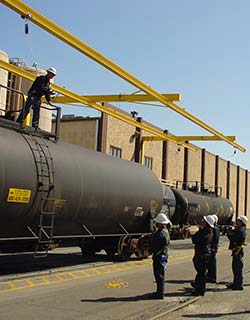
Recommended for: Individuals who are responsible for training Authorized Persons. Includes the Competent Person Training and Competent Inspector courses
OSHA (Federal OSHA) is the primary U.S. regulator for workplace safety. State-plan OSHA programs (like Cal-OSHA in California and WA-OSHA in Washington) enforce their own rules that can be equal to or stricter than federal OSHA. ANSI/ASSP publishes consensus standards (like the ANSI/ASSP Z359 Fall Protection Code) that represent best practices and are often referenced by owners, engineers, and safety programs—even when not explicitly adopted into law.
Properly designed access stairs, platforms, and walkway systems can be manufactured to comply with applicable OSHA, ANSI, and other workplace safety standards, depending on the installation requirements.
Yes. CAI Safety's Aluminum Modular Access Stairs are designed to be OSHA compliant when installed correctly and according to applicable requirements. The product page references OSHA 1910.23, 1910.25, 1926.502(f)(2)(iii), 1910.28, and 1910.29, as well as ANSI A1264.1 and A14.3.
Yes. Aluminum modular access stairs can be suitable for indoor and outdoor applications. Aluminum construction provides corrosion resistance and durability, making the system appropriate for environments where long-term performance is important.
FAQs
ANSI standards are voluntary guidelines; however, many ANSI requirements are adopted by OSHA and may become enforceable through OSHA regulations.
Yes. Certain CAI Safety mezzanine gate systems can be supplied with automated or electrically operated functionality to improve operational efficiency and worker safety.
FAQs
Yes. CAI Safety states that its fall protection anchors are OSHA and ANSI compliant and are designed for fall arrest and fall restraint applications.
Yes. CAI Safety states that its loading dock cantilever gate systems meet or exceed OSHA fall protection requirements for loading dock applications.
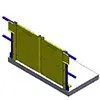
Yes. CAI Safety states that its mezzanine safety gate systems are designed to comply with applicable OSHA and ANSI fall protection requirements.
FAQs
Yes. Many CAI Safety roof skylight systems feature a freestanding, non-penetrating design that helps preserve roof integrity while providing fall protection around skylights and roof openings.
CAI Safety warning line systems are designed to help facilities establish OSHA-compliant fall protection zones and clearly identify hazardous rooftop areas.
Yes. Properly designed and installed crossover stair bridges can help facilities comply with OSHA requirements for safe access, walking-working surfaces, and fall protection.
Yes. Many crossover stair bridges are designed for both indoor and outdoor environments and can be constructed using corrosion-resistant materials suitable for harsh weather conditions.
Yes. OSHA requires employers to train workers who may be exposed to fall hazards so they can recognize risks and properly use fall protection equipment and procedures.
Yes. Properly designed, tested, and installed fixed roof anchors can help facilities comply with OSHA and ANSI fall protection requirements.
Yes. Properly designed, installed, and maintained fold down ladders can help facilities comply with applicable OSHA requirements for safe access and workplace safety.
Yes. Many fold down ladders are designed for indoor and outdoor applications and can be constructed using corrosion-resistant materials for harsh environments.
Yes. Properly designed and installed guardrail systems can help facilities comply with OSHA fall protection requirements for rooftop and elevated work environments.
Yes. Properly designed and installed industrial safety gates can help facilities comply with OSHA requirements for fall protection and safe access to elevated work areas.
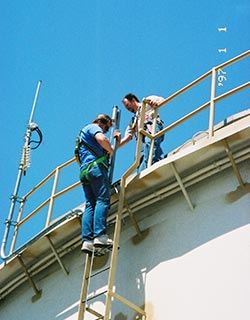
Yes. CAI Safety offers ladder fall arrest systems specifically designed for roof hatch applications, helping workers remain protected while transitioning through rooftop access points.
Recommended for: Managers, Immediate Supervisors of authorized persons, or Individuals working at heights. Includes Competent Person and Competent Inspector
Recommended for: All individuals who are working at heights. Training required for employees who will be working first hand with the fall protection systems and devices
Recommended for: Individuals who are responsible for training Authorized Persons. Includes the Competent Person Training and Competent Inspector courses