





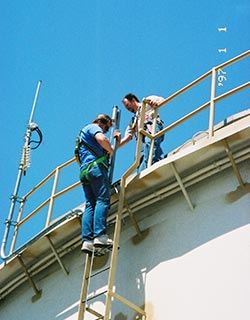


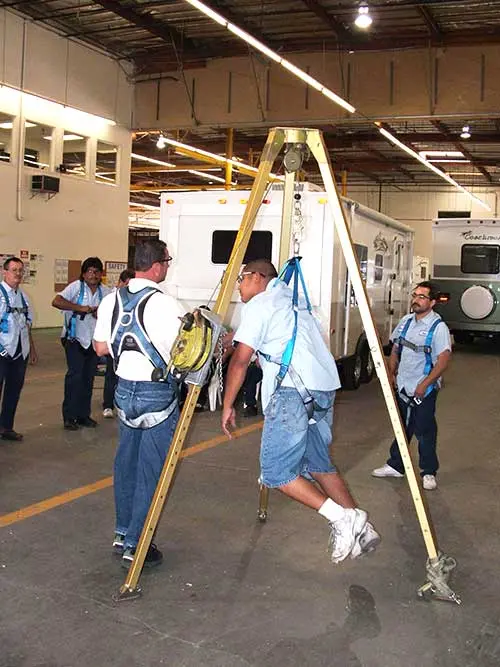
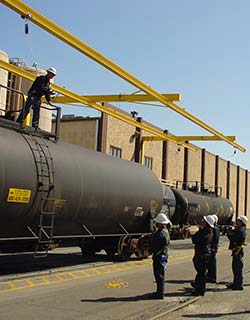
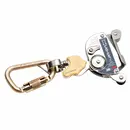
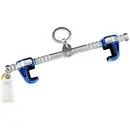

A roof horizontal lifeline system is a fall protection system that consists of a horizontal cable or rail installed across a roof, allowing workers to remain connected while moving safely across elevated work areas.
Roof horizontal lifeline systems are commonly used on commercial buildings, warehouses, manufacturing facilities, distribution centers, utility structures, and industrial rooftops where workers perform maintenance, inspections, or repairs.
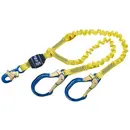
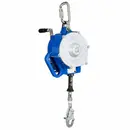
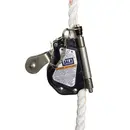
Workers connect their harness and lanyard or self-retracting lifeline (SRL) to a traveler or attachment device that moves along the horizontal lifeline, providing continuous fall protection while allowing mobility.
These systems provide continuous fall protection, improve worker mobility, reduce the need for multiple anchor points, increase productivity, and support OSHA-compliant rooftop safety programs.
Yes. Properly engineered, installed, and maintained roof horizontal lifeline systems can help facilities comply with OSHA and ANSI fall protection requirements.
Yes. Many roof horizontal lifeline systems can be retrofitted onto existing buildings, subject to structural evaluation and engineering requirements.
The number of users depends on the system design, engineering specifications, anchor capacity, and applicable safety standards. Some systems support multiple users simultaneously.
Horizontal lifeline systems can be designed for metal roofs, standing seam roofs, concrete roofs, membrane roofs, structural steel roofs, and other rooftop configurations.
Yes. Regular inspections are recommended in accordance with OSHA requirements, ANSI standards, and manufacturer guidelines to ensure continued safety and compliance.
The appropriate system depends on roof layout, worker access requirements, number of users, structural capacity, fall clearance requirements, environmental conditions, and applicable OSHA and ANSI regulations. CAI Safety can help determine the most suitable solution for a specific application.