







Fall Protection FAQs – Frequently Asked Questions
Common frequently asked questions regarding fall protection, OSHA, ANSI, and Cal-OSHA Compliance, and various other safety topics
Fall protection is a safety regulatory system designed to prevent falls, required at different heights depending on the industry (e.g., 4 feet in general industry, 6 feet in construction). A complete system includes railing, anchor points, body harnesses, and lanyards, and requires regular inspection by a “competent person” before each use and annually. OSHA also requires employers to have a documented fall protection plan, which should include rescue procedures in case of a fall. Always refer to the manufacturer’s “Installation, Operation, and Maintenance” (O&M) documentation before installing any OSHA compliant fall protection system.
Safety note: Requirements can vary by industry, task, and jurisdiction. When in doubt, have a competent person evaluate the work area and select the right protection method or contact CAISS.
- Show All
- Access Stairs
- Access Stairs & Walkways
- ANSI Compliance
- Crossover Stairs
- Fall Protection
- Fall Protection Anchors
- Fall Protection Training
- Fixed Roof Anchors
- Fold Down Ladders
- Guardrails
- Ladder Fall Arrest
- Ladder Safety Gates
- Loading Dock Gates
- Mezzanine Gates
- Orders
- OSHA Compliance
- Overhead Systems
- Portable Ladders
- Portable Systems
- Quotations / Proposals
- Roof Fall Protection
- Roof Hatches
- Roof Horizontal Lifeline
- Safety Gates
- Self-Retracting Lifelines
- Services
- Skylights
- Warning Lines
What are the main regulatory and standards bodies for fall protection?
OSHA (Federal OSHA) is the primary U.S. regulator for workplace safety. State-plan OSHA programs (like Cal-OSHA in California and WA-OSHA in Washington) enforce their own rules that can be equal to or stricter than federal OSHA. ANSI/ASSP publishes consensus standards (like the ANSI/ASSP Z359 Fall Protection Code) that represent best practices and are often referenced by owners, engineers, and safety programs—even when not explicitly adopted into law.
Related CAISS resources:
At what height is fall protection required?
It depends on the work type and the regulation that applies:
- Federal OSHA (general industry): commonly 4 ft. for unprotected sides/edges.
- Federal OSHA (construction): commonly 6 ft. for many construction activities.
- Cal-OSHA (California): many construction scenarios use 7.5 ft. as a key trigger height, but California also has task-specific rules (roofing is a common example). Cal DIR
Because exceptions and task-specific rules are common (roof edges, ladders, platforms, leading edges, skylights, etc.), the safest approach is to treat fall hazards as a site-specific assessment, not a single universal number.
Related CAISS resources:
What are the OSHA/ANSI anchorage (anchor point) requirements?
For personal fall arrest / personal fall protection anchorages, OSHA generally requires anchor points to be either:
- Rated to 5,000 lb per worker attached, or
- Engineered as part of a complete system with a safety factor of at least 2, under the supervision of a qualified person. OSHA.gov
Related CAISS resources:
How often must fall protection equipment be inspected?
Two layers of inspection matter:
- Pre-use / frequent user checks (OSHA-required):
- Formal documented inspections (often required by state rules, owners, or ANSI programs):
- Cal-OSHA requires fall protection systems/components be formally inspected and documented at least twice annually by a competent person. Cal DIR
Related CAISS resources:
What is the difference between a “Competent Person” and a “Qualified Person”?
Competent person: Someone capable of identifying hazards and authorized to take prompt corrective measures.
Qualified person: Someone with a recognized degree/certificate/professional standing, or extensive knowledge/training/experience, who has demonstrated ability to solve problems related to the work or project (commonly the person who designs/engineers systems).
Related CAISS resources:
Are there rescue (retrieval) requirements when using fall arrest?
Yes. OSHA requires employers to provide for prompt rescue if a fall occurs (or ensure the worker can self-rescue), in both:
- Construction
- General industry
OSHA has also clarified that the rule does not specifically require a written rescue plan, but employers still must be capable of prompt rescue.
In California, Cal-OSHA explicitly requires a rescue plan and rescue equipment when PFAS are used.
Related CAISS resources:
Who is responsible for providing fall protection?
In most cases, the employer is responsible for identifying fall hazards, selecting compliant systems, providing training, and ensuring proper use — this is a core theme throughout OSHA’s fall protection framework.
What is the OSHA “Walking-Working Surfaces” standard?
OSHA updated its Walking-Working Surfaces rules (general industry, 29 CFR 1910 Subpart D & related fall protection rules) with a final rule published in November 2016 and effective January 2017, aimed at reducing slip/trip/fall hazards.
How tall must a fixed ladder be before fall protection is required?
Under OSHA’s fixed ladder rules, fixed ladders extending more than 24 feet above a lower level generally must have a ladder safety system or personal fall arrest system (instead of relying on cages alone).
Related CAISS resources:
Do ladder safety cages count as fall protection?
A cage can help with ladder climbing control, but OSHA has moved away from cages as the primary means of fall protection on taller fixed ladders. Existing cages may be allowed in certain situations, but OSHA’s fixed ladder rules require compliant solutions (ladder safety systems / PFAS) and include a long-term phase-out timeline for cages. OSHA
Visit: CAI Safety Systems Fixed Vertical Ladders
How far above the ladder does the fall arrest system need to extend?
For safe transitions, the ladder safety system should be configured so the user can remain protected while moving onto/off the upper landing. According to compliance, the fall arrest system must extend at least 3ft. (36") above the top rung of the ladder for safe transition. The exact “extension above the top rung/landing” depends on:
- the ladder type (through vs. side-step),
- the landing geometry,
- and the manufacturer’s system requirements for the rail/cable termination and connector travel.
Related CAISS resources:
What are the OSHA Compliant standards and codes for guardrail/railing systems?
- 29 CFR 1910.29: General industry standard for fall protection systems and falling object protection.
- 29 CFR 1926.502: Criteria and practices for fall protection systems in construction.
- 29 CFR 1926.501: Duty to have fall protection, including when working at the edges of excavations or over dangerous equipment.
What are the Cal-OSHA Compliant standards and codes for guardrail/railing systems?
Cal-OSHA fall protection guardrails are subject to strict requirements, primarily outlined in the California Code of Regulations. Key standards include a top rail height of 42–45 inches above the walking surface, a requirement for a midrail or equivalent, and a minimum strength of 20 pounds per linear foot for a live load. Posts must be spaced no more than 8 feet apart on center.
- Title 8, Section 3209: Standard Guardrails. More strict than the federal rules for guardrails and roof fall protection systems.
- Title 8, Section 1620: Design and Construction of Railings. More strict than the federal rules for guardrails and roof fall protection systems.
Visit: CAI Safety Systems Guardrail Fall Prevention Systems
Freight Rates & Shipping Quotes
Freight rates are calculated based on the prevailing freight market value when the quotation is created.
When CAISS sends clients a quotation, freight cost is included to ship the items/material to the shipping address provided by the client.
Freight cost provided in the quotation is valid for 3 weeks from the delivery of the quotation to the client (via email). In this case, if you wish to convert the quotation into an order after 3 weeks have past, we will require to update the freight cost prior to processing the order.
For some items in our inventory, freight cost cannot be pre-determined due to the complexity of the packaging (Items are overweight, bundled individually, and/or exceeds dimensional limits). At this point, CAISS will include "**Freight To Be Determined when ready to Ship" at zero cost in the quotation to let you know that we will seek your approval for freight cost when the material is ready to ship.
Client Arranged Shipping
CAISS allows our clients to arrange their own freight service via their own shipping account or freight vendor (Freight Collect).
When CAISS sends clients a quotation, CAISS will include "Client Arranged Shipping" at zero cost in the quotation to let the client know that they will be arranging their own freight service to pickup and deliver the items to the shipping address provided. Once your order is ready to ship, the order will be shipped and billed to the freight account provided.
Please keep your shipper's contact/account information handy as CAISS will be requesting this information from our clients at the time of processing.
Quotation Validity
All quotations issued by CAISS are valid for 30 days from the date the quotation was sent to the client (via email).
After 30 days of receiving the quotation, pricing on items may be subject to change without prior approval, and may require to be requoted.
The validity of the quotation has been mentioned in the quotation email and PDF provided to the client.
- Quotation created on: XXX Date
- Quotation valid until: XXX Date
Processing Fees
All quotations and orders include the following Processing Fees:
- Credit Card Processing Fee: 2.9%
- This fee is associated with the credit card company that CAISS is in partnership with.
- ACH/Bank Transfer Processing Fee: $0.00
- When you select the 'ACH/Bank Transfer' payment option at checkout, there is no processing fee included with a Bank to Bank transfer / wire transfer.
- If your bank requires an additional transfer fee, please do not include this fee as part of the order total amount.
- Check Payment Processing Fee: $0.00
- When you select the 'Check Payment' payment option at checkout, there is no processing fee included. Simply mail us your check payment.
- PO Processing Fee: 5%
- This fee is associated with manual order processing by CAISS staff for orders on Payment Terms such as NET10, NET30, etc.
Payment Terms
CAISS provides the following payment terms to first time clients.
- 50% upon order and 50% NET10 upon delivery
- There is a 5% PO processing fee added to the order.
- We will need a credit card on file and will verify availability of funds to cover the final 50% before processing the order.
- Card will not be charged if final payment is received in a timely manner when invoiced 10 days after delivery of order.
- CAISS does not collect Sales Tax on these orders, except for the state of California.
- Credit references are not required, however, in some instances we may request this.
In summary, we invoice the first 50% of the order when order is placed. Once the order has been delivered, CAISS will invoice the remaining 50% 10 days after delivery.
Returning clients automatically qualify for 100% NET30 payment terms, provided an order is placed at least 2 years (24 months) from their last order with us. CAISS will analyze this on a case-by-case basis.
CAISS does not provide NET30, NET60, NET90, or any other payment terms to first time clients.
Lead Times
The lead time for material depends on various factors such as availability, packaging, transit time, holiday schedules, and market transport delays.
Lead times for all material is mentioned in the quotation/proposal we send you.
To find out lead times on online orders, simply send us an email by replying to your order confirmation, and we will respond to you.
Otherwise, you can call or email us about the lead times for all systems, and we will let you know the estimated delivery window.
Sales Tax
CAISS has an affiliation with TaxCloud which is the leading tax reporting agency for tax compliance across the US. TaxCloud® is a Registered Trademark of The Federal Tax Authority, LLC. Our online website is integrated with TaxCloud and automatically calculates Sales Tax during the checkout process.
CAISS COLLECTS SALES TAX in states where we have physical presence (or nexus). The following are the US States CAISS does not mostly collect Sales Tax from: AL, AR, CO, FL, HI, ID, IA, MD, MO, NM, PA, NY. If Sales Tax is included in these states, it is because the taxing authority of that state requires CAISS to collect and report sales tax.
Online orders automatically calculate Sales Tax during the checkout process based on the shipping address/destination entered. If the Sales Tax item is $0.00 at checkout, this means that your State's tax jurisdiction does not allow CAISS to collect Sales Tax. In this case, your company/you may report the purchase to that state's tax jurisdiction.
Payment Term Orders with an issued Purchase Order (PO) do not qualify CAISS to collect Sales Tax, with the exception of California (CA).
FOR CANADA & MEXICO CUSTOMERS ONLY: CAISS does not collect Sales Tax in these countries. However, there are excise duties, taxes, port handling fees, and other customs charges that are involved. As the recipient of this order, these fees and charges, which will not be included as part of your order, are the “SOLE” responsibility of the client or freight broker making the purchase.
Sometimes, CAISS will include excise duties, taxes, port handling fees, and other customs charges in the freight quote to you, and will specifically mention it.
Sales Tax Exemptions
Online orders automatically calculate Sales Tax during the checkout process based on the shipping address/destination entered.
If you are Sales Tax Exempt, you can go ahead and place your order with Sales Tax included. Once we receive your order email, let us know that you are Tax Exempt and provide us with a copy of your Sales Tax Exemption/Resale Certificate. CAISS will then VOID the Sales Tax on the order before processing payment. This certificate is absolutely necessary for CAISS to process your order with an exemption.
If a customer is not able to provide a copy of their Tax-Exempt Certificate to CAISS (digitally via email) after the order has been placed, CAISS will charge the customer the required Sales Tax to process and complete their order.
Cancellations & Refunds
All cancelled orders, even if not shipped, are subject to a minimum $100.00 or 10% cancellation fee, whichever amount is greater.
Cancellations within 48 hours of placing the order will receive a full refund.
Our team processes orders within the first two business days after receiving the order. When an order is cancelled, this means that more time and effort has been spent on processing your order before cancellation, hence the cancellation fee.
If orders have been delivered, a minimum of 15% restocking fee will be charged to orders that are returned or exchanged. This restocking fee may vary based on the material ordered. Restocking may not be an option for custom engineered orders.
Returns & Exchanges
Both Authorization and a Return Number must be issued by the factory on all returns.
Credit will not be issued for custom built items. Only unused stock items with a purchase date of two (2) months or less will be considered for return.
CAISS accesses returns on a case-by-case basis. Authorized returns will only be accepted for credit toward future purchases from CAISS, less a minimum 15% restocking charge or other handling charges, or costs.
For returns, ensure return number is visibly marked on the exterior of all packages. Customer will be advised by CAISS for returns.
Product & Services Pricing
Prices listed on this Website are valid for and at the time of order placement on the Website. All prices are subject to change without notice.
Every quotation issued by CAISS has an expiration date. The pricing quoted on the proposal expires on that expiration date and is subject to change.
What’s included with CAISS In-house User Equipment Inspection?
If you have a fall protection system that requires a full body harness and tying off to an anchor or horizontal lifeline, you are required by law, and the manufacturer of the equipment, to adhere to strict inspection, use, and maintenance requirements. At CAI Safety Systems, our competent inspectors conduct comprehensive functional tests on the fall protection equipment to ensure that it is operating properly and that all components are working together as intended.
NOTE: CAISS does not repair your equipment in this inspection program. We will provide you with suggestions on the necessary repair, replacement, or modification of the equipment on inspection completion in a detailed report.
- Functionality: Our inspector will conduct a functional test of the fall protection system to ensure that it is operating properly and that all components are working together as intended.
- Tag-Out: If any defects or damage are found during the inspection, we will alert you and advise if the system needs to be taken out of service or may continue in use until repairs or replacement can be made.
- Replacements: We will provide a proposal if necessary to repair, replace, or modify any part of the fall protection system.
- Update Labels: The existing labels will be updated with the current inspection date for the benefit of all future users.
- Inspection Report: A report will be generated to provide an executive summary.
- Inspection reports for each component, identifying items that failed the inspection or are showing signs of wear and tear.
- If necessary, we will point out any current procedures that could be modified or added to improve safety and longevity of your system.
- We will provide a proposal if necessary to repair, replace, or modify any part of the fall protection system.
Related CAISS resources:
How to submit an order to have CAISS inspect User Equipment?
User equipment comprises devices such as SRLs, Harnesses, Lanyards, etc. You are required by law, and the manufacturer of the equipment, to adhere to strict inspection, use, and maintenance requirements. At CAISS, our competent inspectors conduct comprehensive functional tests on the fall protection equipment to ensure that it is operating properly and that all components are working together as intended.
NOTE: CAISS does not repair your equipment in this inspection program. We will provide you with suggestions on the necessary repair, replacement, or modification of the equipment on inspection completion in a detailed report.
- Placing your order online: Visit Fall Protection User Equipment Inspection page and place your order by choosing the correct equipment. Input the "Brand" and "Model #" of the equipment. (if you do not have this on hand, CAISS will contact you after receiving the order)
- Once the above information is received, our customer service will provide you with a Inspection Authorization Number (IAN#). Reference this number on the exterior of all packages you are shipping.
- When shipping your equipment to CAISS, please remember to arrange a return as well with your shipping carrier.
- Inspection paperwork is included with all repaired products returned to you.
- Upon completion of the service, we will confirm shipment to the destination noted on the purchase order.
- The program guarantees a 4-5 business days turnaround time up to 12 units. For more than 12 units, please call us to verify lead time.
- The client is responsible for freight costs to CAISS and return to the client.
Related CAISS resources:
Can CAISS ship outside of the Continental USA?
CAI Safety Systems, Inc. does not ship some Fall Protection, Fall Arrest, or Fall Restraint Systems outside the Continental US **. Here’s why…
- Some CAISS fall protection systems have been rated to comply with USA Federal OSHA, Cal-OSHA, ANSI, and other US compliance standards and regulations.
- Due to conflicts with the compliance standards and regulations of other countries, such as Canada, Mexico, and Europe, these fall protection systems may or may not comply with local standards.
- Products marked with: “Availability: CAISS does not ship this product outside the continental USA.” qualify for this category.
- If you would like to purchase one of these systems outside the United States, please contact your local fall protection distributor such as 3M, Honeywell, etc.
- If you have any questions, please contact us.
- For Canada, a good source for fall protection material would be:
- 3M Canada https://www.3mcanada.ca/3M/en_CA/p/c/ppe/fall-protection/
- ORS Canada http://orscanada.com/
** Continental United States: Includes all continental states, Alaska, and Hawaii.
Can CAISS ship to Canada?
Yes, CAISS can ship to Canada, but requires our clients to provide us with their Canadian Customs Freight Broker information. Typically, we will require the Broker Name, Phone Number, Contact Name, and any other details.
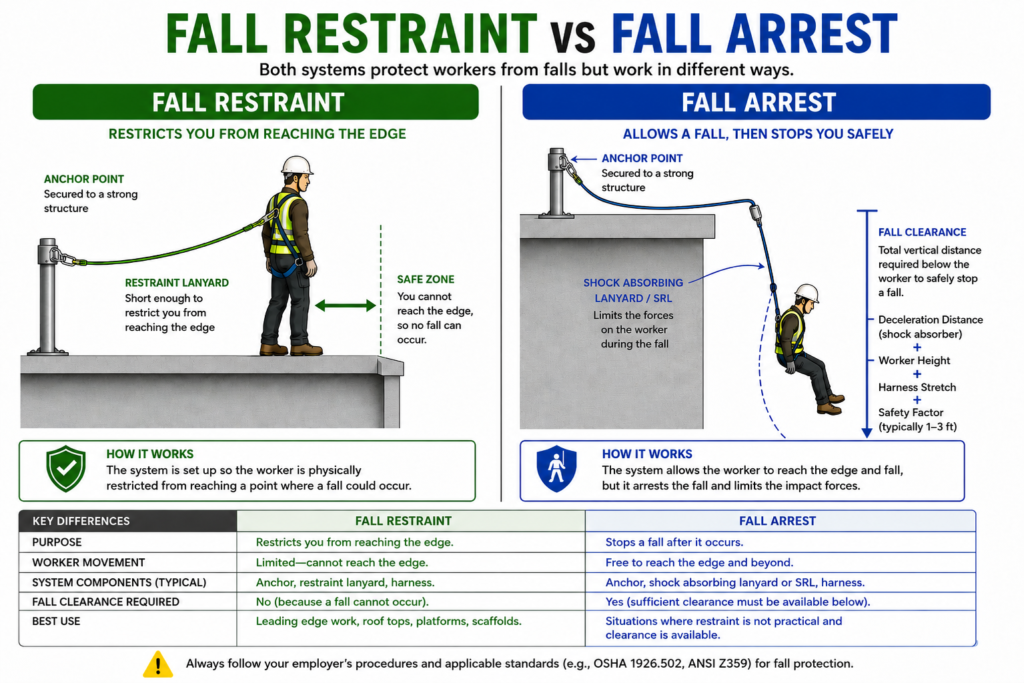
What is the difference between “Fall Arrest” and “Fall Restraint”?
FALL ARREST |
FALL RESTRAINT |
| Fall Arrest is reactive — it allows a worker to move freely near or over a fall hazard, but catches them after a fall begins. The system arrests the fall before the worker hits a lower level. | Fall Restraint is restrictive — it stops a worker from ever reaching a fall hazard. The lanyard or tether is short enough that the worker physically cannot get to the edge. No fall occurs. |
|
|
For a fall protection quote, send your project location, work-area photos, approximate dimensions, and a description of the access or fall hazard. Include available drawings, the number of users, your target schedule, and whether you need supply only or additional engineering, installation, inspection, or training. If you are unsure which system you need, describe the task and CAI can help identify the next step.
The right fall protection system depends on where employees work, how they access the area, and the tasks they perform. CAI Safety Systems helps evaluate options such as guardrails, fall restraint systems, overhead fall arrest systems, and ladder safety systems. Share photos, drawings, and a description of the work area so we can help determine the next step, including whether a site assessment is needed.
Yes. CAI provides custom engineered fall protection solutions, with services that can include site assessment, design and engineering, supply, installation, inspection, and user training. Your proposal identifies the services included and the project information needed to proceed. This coordinated approach helps address site conditions, system connections, and operational needs before installation begins.
CAI offers roof fall protection options including non-penetrating guardrails, fixed roof anchors, roof horizontal lifeline systems, roof hatch guards, and skylight protection. Fixed ladder fall protection options include cable and rigid-track ladder safety systems. Selection depends on the roof or ladder configuration, access points, supporting structure, and how employees move through the work area.
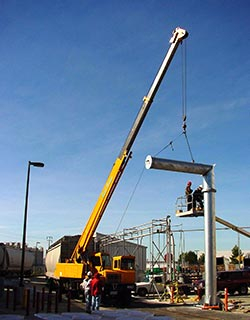
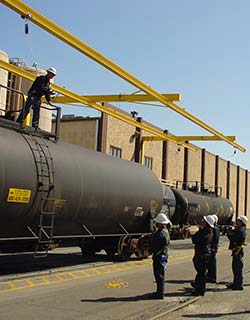
Yes. CAI offers fall protection solutions for truck loading, railcar access, aircraft maintenance, and other elevated work applications. Options include overhead rigid rail systems, horizontal lifelines, mobile fall protection systems, and access platforms. The appropriate solution depends on vehicle dimensions, required work coverage, available clearance, and whether the system needs to serve one location or multiple work areas.
CAI offers onsite fall protection system inspections and separate user-equipment inspection services. To help us define the scope, provide the system manufacturer, installation location, available drawings, and previous inspection reports. The proposal will identify the components and services included. Inspection findings can help determine whether maintenance, repair, replacement, or further evaluation is needed.
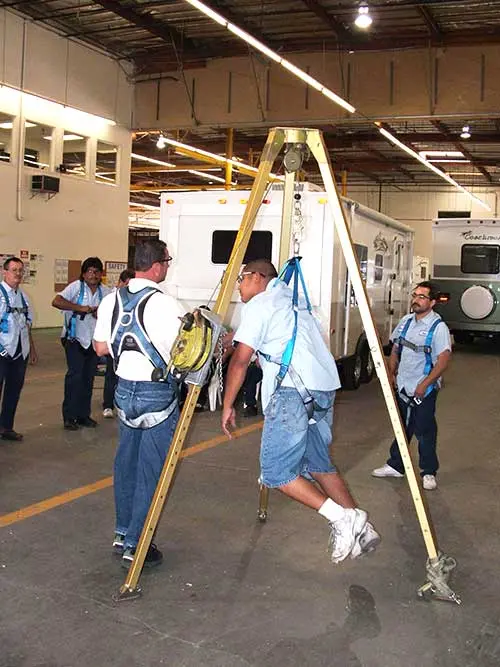
CAI offers authorized person, competent person, and train-the-trainer fall protection training. The appropriate course depends on whether participants use the equipment, oversee work at height, or train other employees. Tell us which fall protection systems your team uses and each participant’s responsibilities so we can recommend training suited to your workplace.
You can browse CAI’s online store for fall protection equipment and selected configurable systems, including guardrails, safety gates, and ladder fall arrest systems. Product pages provide pricing or quote options and supporting information. For custom engineered systems, installation services, or questions about suitability and compatibility, contact CAI before ordering so we can review your application.
What are access stairs and platforms used for?
Access stairs and platforms provide safe access to elevated work areas, rooftops, equipment, machinery, and maintenance locations. They help workers reach difficult areas while reducing fall hazards and improving workplace safety.
What is a crossover stair bridge?
A crossover stair bridge is an elevated access system that allows workers to safely cross over pipes, conveyors, ductwork, equipment, or other obstacles while maintaining a designated walking path.
Where are crossover walkway ramps commonly installed?
Crossover walkway ramps are commonly installed on rooftops, industrial facilities, manufacturing plants, and maintenance access routes where workers need a safe path over obstacles or uneven surfaces.
Are modular access stairs customizable?
Yes. Modular access stair systems can be configured with various stair angles, platform sizes, handrails, and access heights to meet specific site requirements and building layouts.
What are the benefits of aluminum access stairs?
Aluminum access stairs are lightweight, corrosion-resistant, durable, and easy to install. They are well suited for both indoor and outdoor applications where long-term performance and low maintenance are important.
Can access stairs and platforms be used for equipment maintenance?
Yes. Access stairs and platforms are commonly used to provide safe access to machinery, HVAC systems, rooftop equipment, and other elevated assets that require regular inspection and maintenance.
What are fold-down ladders used for?
Fold-down ladders provide convenient access to roof spaces, ceiling cavities, and maintenance areas from inside a building. They can be folded away when not in use to maximize available space.
Do access stair systems require welding during installation?
Many modular access stair systems use bolt-together components that allow for quick on-site assembly without the need for welding, helping reduce installation time and costs.
Are access stairs and walkways compliant with OSHA requirements?
Properly designed access stairs, platforms, and walkway systems can be manufactured to comply with applicable OSHA, ANSI, and other workplace safety standards, depending on the installation requirements.
Can access platforms be expanded or modified in the future?
Yes. Modular systems are designed to be adaptable and can often be expanded, reconfigured, or relocated as facility requirements change.
What industries use access stairs, walkways, and platforms?
These systems are widely used in manufacturing facilities, warehouses, commercial buildings, utility plants, distribution centres, transportation facilities, and industrial maintenance environments.
How do access stairs and platforms improve workplace safety?
Access stairs and platforms create designated walking and working surfaces, reduce climbing risks, improve worker stability, and help organizations maintain safer access to elevated locations.
What is ANSI in relation to fall protection?
ANSI (American National Standards Institute) is an organization that develops voluntary consensus standards for workplace safety, including fall protection systems, equipment, training, and safety procedures.
Are ANSI fall protection standards legally required?
ANSI standards are voluntary guidelines; however, many ANSI requirements are adopted by OSHA and may become enforceable through OSHA regulations.
What is ANSI Z359?
ANSI Z359 is a fall protection code that establishes requirements for personal fall arrest systems, subsystems, components, training, rescue planning, and equipment performance.
What is a personal fall arrest system (PFAS)?
A personal fall arrest system is a combination of equipment including a full-body harness, connecting device, and anchorage designed to safely stop a worker during a fall.
Does ANSI require the use of full-body harnesses?
Yes. ANSI standards for personal fall arrest systems are based on the use of full-body harnesses rather than body belts for fall arrest applications.
What is the maximum arrest force allowed under ANSI standards?
NSI standards specify that a personal fall arrest system should limit the maximum arrest force to 1,800 pounds (8.0 kN) when tested according to the applicable requirements.
Are snap hooks and carabiners required to be self-locking?
Yes. ANSI requires snap hooks and carabiners used in fall protection systems to be self-closing and self-locking, requiring at least two deliberate actions to open.
What are the requirements for energy absorbers in fall protection systems?
ANSI standards require energy absorbers to limit maximum arrest force to specified levels during dynamic testing to help reduce impact forces on workers.
Does ANSI require equipment markings and labels?
Yes. ANSI requires markings and labels on fall protection equipment to remain legible and securely attached throughout the service life of the equipment.
Is fall protection training required for workers?
ANSI standards emphasize proper training, and OSHA requires workers exposed to fall hazards to be trained by a competent person to recognize hazards and use fall protection equipment correctly.
Why are ANSI standards important for workplace safety?
ANSI standards help establish consistent requirements for fall protection equipment, system design, training, inspection, and safe work practices, contributing to safer workplaces.
How often are ANSI fall protection standards updated?
ANSI standards are periodically reviewed and revised to address new technologies, industry practices, and evolving workplace safety requirements.
Does CAI Safety Systems provide ANSI-compliant fall protection solutions?
CAI Safety Systems Inc. offers fall protection systems, training, services, and equipment designed to support compliance with applicable ANSI and OSHA fall protection requirements.
What is a fall protection anchor?
A fall protection anchor is a secure attachment point designed to connect personal fall arrest, fall restraint, or positioning systems. Anchors help protect workers when working at height by providing a reliable connection for safety equipment.
What types of fall protection anchors does CAI Safety Systems offer?
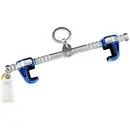
CAI Safety Systems Inc offers a variety of fall protection anchors, including counterweight anchors, freestanding anchors, fixed roof anchors, counterweight rooftop anchors, and portable vacuum anchors for different applications and environments.
When should a portable anchor be used?
Portable anchors are ideal when a permanent anchor installation is not practical or when temporary fall protection is required for maintenance, inspections, construction, or short-term access work.
What is a counterweight roof anchor?
A counterweight roof anchor is a non-penetrating fall protection anchor that uses weighted components to provide fall protection without attaching directly to the roof structure, helping preserve roof integrity.
Are CAI Safety fall protection anchors OSHA and ANSI compliant?
Yes. CAI Safety states that its fall protection anchors are OSHA and ANSI compliant and are designed for fall arrest and fall restraint applications.
What applications commonly use fall protection anchors?
Fall protection anchors are commonly used on rooftops, tanks, railcars, tanker trucks, buses, earth-moving equipment, industrial facilities, and other elevated work areas where fall hazards exist.
Can fall protection anchors be used with harnesses and self-retracting lifelines?
Yes. Fall protection anchors are designed to work with compatible user equipment such as full-body harnesses, lanyards, self-retracting lifelines (SRLs), and other fall arrest components.
What is the difference between a fixed anchor and a portable anchor?
A fixed anchor is permanently attached to a structure and remains in place for ongoing use, while a portable anchor can be moved between locations to provide temporary fall protection as needed.
How do I choose the right fall protection anchor for my application?
The appropriate anchor depends on factors such as the work environment, available structural support, roof type, worker mobility requirements, fall clearance, and whether a permanent or temporary solution is needed. CAI Safety can assist with anchor selection based on specific safety requirements.
Why are fall protection anchors important for workplace safety?
Fall protection anchors provide the critical connection point required for fall arrest and restraint systems, helping organizations reduce fall risks, improve worker safety, and support compliance with workplace safety regulations.
What is a roof skylight guard?
A roof skylight guard is a protective safety system designed to prevent workers from falling through skylights and roof openings while performing maintenance, inspections, or other rooftop activities. It helps improve workplace safety and supports OSHA fall protection requirements.
Why are skylights considered fall hazards?
Skylights can create dangerous fall-through hazards because workers may accidentally step, trip, or fall onto a skylight that cannot support their weight. Proper protection helps reduce the risk of serious injuries and fatalities.
What types of roof skylight protection systems does CAI Safety offer?
CAI Safety offers roof skylight protection solutions including roof skylight systems, fixed dome skylight screens, roof hatch guards, and roof hatch guardrail systems designed to protect workers from fall hazards.
Are CAI Safety skylight protection systems non-penetrating?
Yes. Many CAI Safety roof skylight systems feature a freestanding, non-penetrating design that helps preserve roof integrity while providing fall protection around skylights and roof openings.
Are roof skylight guards OSHA compliant?
Roof skylight guards are designed to help facilities meet OSHA fall protection requirements by protecting workers from falls through skylights and other roof openings. Compliance depends on proper system selection, installation, and use.
Where are skylight protection systems commonly installed?
Skylight protection systems are commonly installed on commercial buildings, warehouses, manufacturing facilities, distribution centers, schools, hospitals, and industrial rooftops where skylights are present.
What is the benefit of a non-penetrating skylight protection system?
Non-penetrating systems help eliminate the need to drill into the roof structure, reducing the risk of roof leaks, preserving warranties, and simplifying installation.
Can skylight guards be installed on existing buildings?
Yes. Skylight protection systems can typically be installed on both new construction projects and existing buildings to improve rooftop safety and reduce fall risks.
How do roof skylight systems improve workplace safety?
Roof skylight systems create a protective barrier around skylights and roof openings, helping workers safely perform inspections, maintenance, and repair activities while minimizing fall hazards.
How do I choose the right skylight protection solution?
The appropriate solution depends on factors such as skylight size, roof type, worker access requirements, building layout, and applicable safety regulations. CAI Safety can help identify the most suitable system for a specific application.
What is fall protection training?
Fall protection training is a safety program that teaches workers how to recognize fall hazards, properly use fall protection equipment, and follow OSHA and ANSI requirements when working at height.
What types of fall protection training does CAI Safety offer?
CAI Safety offers Competent Person Training, Authorized Person Training, and Train the Trainer courses designed for different levels of responsibility and experience.
Who should attend Authorized Person Training?
Authorized Person Training is recommended for employees who work at heights and use fall protection systems as part of their daily job responsibilities.
Who should attend Competent Person Training?
Competent Person Training is intended for managers, supervisors, safety personnel, and individuals responsible for implementing, monitoring, and managing fall protection programs.
What is Train the Trainer fall protection training?
Train the Trainer courses are designed for individuals who will be responsible for delivering fall protection training within their organization and educating Authorized Persons.
Does fall protection training cover OSHA and ANSI requirements?
Yes. CAI Safety's training programs include instruction on applicable OSHA regulations and ANSI Z359 fall protection standards to help organizations maintain compliance.
Is hands-on fall protection training included?
Yes. Training combines classroom instruction with practical hands-on exercises, equipment demonstrations, inspections, and real-world fall protection scenarios.
Do participants receive a certificate after completing training?
Yes. Upon successful completion of the course requirements, participants receive a certificate demonstrating they have met or exceeded applicable OSHA and ANSI training requirements for their training level.
Can CAI Safety provide training at our facility?
Yes. CAI Safety conducts onsite fall protection training at customer facilities, allowing organizations to train multiple employees while focusing on site-specific hazards and equipment.
Why is fall protection training important?
Fall protection training helps workers identify hazards, properly inspect and use equipment, understand rescue procedures, and reduce the risk of falls and workplace injuries when working at elevated locations.
A guardrail fall prevention system is a passive fall protection solution designed to create a physical barrier around roof edges, elevated work areas, and fall hazards, helping prevent workers from accidentally accessing dangerous areas.
Guardrail systems provide continuous protection without requiring workers to connect to personal fall arrest equipment, helping reduce fall risks and improve safety compliance.
Yes. Properly designed and installed guardrail systems can help facilities comply with OSHA fall protection requirements for rooftop and elevated work environments.
Yes. CAI Safety offers freestanding, non-penetrating guardrail systems that help protect workers while preserving roof integrity and avoiding roof penetrations.
Guardrail systems can be installed around roof edges, roof hatches, skylights, equipment access areas, mezzanines, loading docks, and other elevated work locations.
CAI Safety offers a variety of guardrail solutions, including freestanding guardrails, parapet-mounted guardrails, roof hatch guardrails, and skylight protection systems designed for different applications.
Yes. Guardrail systems can typically be retrofitted onto existing commercial, industrial, and institutional buildings to improve rooftop safety and reduce fall hazards.
Non-penetrating guardrails help eliminate the need to drill into the roof structure, reducing the risk of leaks, preserving roof warranties, and simplifying installation.
Guardrail systems are widely used in manufacturing facilities, warehouses, commercial buildings, schools, hospitals, utility plants, distribution centres, and industrial facilities with rooftop access requirements.
The best guardrail solution depends on factors such as roof type, building layout, fall hazards, worker access requirements, and applicable OSHA regulations. CAI Safety can help determine the most appropriate system for your specific application.
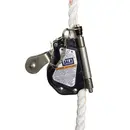
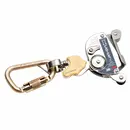
Self-retracting lifelines are fall protection devices that automatically extend and retract while locking during a fall to arrest worker movement and reduce fall distance.
A fall protection plan is a documented strategy that identifies fall hazards, outlines control measures, specifies equipment requirements, and establishes worker training and rescue procedures.
CAI Safety's modular access stair systems can be used for access up to 20 feet in height, including configurations with change-in-direction platforms. The system can also be designed for specific application requirements.
Yes. CAI Safety's Aluminum Modular Access Stairs are designed to be OSHA compliant when installed correctly and according to applicable requirements. The product page references OSHA 1910.23, 1910.25, 1926.502(f)(2)(iii), 1910.28, and 1910.29, as well as ANSI A1264.1 and A14.3.