Recommended for: Managers, Immediate Supervisors of authorized persons, or Individuals working at heights. Includes Competent Person and Competent Inspector
Recommended for: All individuals who are working at heights. Training required for employees who will be working first hand with the fall protection systems and devices
Recommended for: Individuals who are responsible for training Authorized Persons. Includes the Competent Person Training and Competent Inspector courses
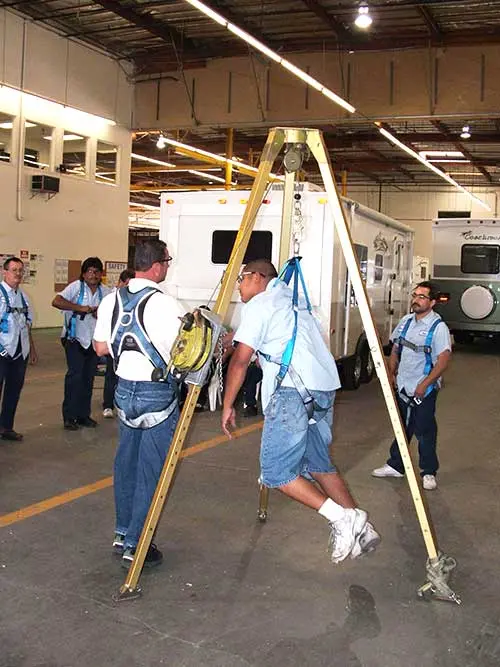
Mobile fall protection systems are commonly used for maintenance, inspections, construction activities, aircraft servicing, vehicle maintenance, rooftop work, and industrial operations where permanent fall protection is not practical.
OSHA generally requires fall protection when workers are exposed to falls of 4 feet or more in general industry, 5 feet in maritime operations, 6 feet in construction, and 8 feet in longshoring operations.
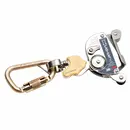
A leading-edge or Class 2 SRL should be considered when the lifeline may contact or travel over an exposed edge during a fall, or when the anchorage must be located below the worker's dorsal D-ring. The SRL must be specifically tested and approved for the anticipated condition. Review the manufacturer's instructions for permitted anchor height, setback distance, edge requirements, swing-fall limits, and required fall clearance.
FAQs
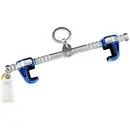
Portable anchors are ideal when a permanent anchor installation is not practical or when temporary fall protection is required for maintenance, inspections, construction, or short-term access work.
Crossover stair bridges are commonly used in manufacturing plants, warehouses, distribution centers, utility facilities, water treatment plants, chemical processing facilities, and industrial environments.
FAQs
Crossover walkway ramps are commonly installed on rooftops, industrial facilities, manufacturing plants, and maintenance access routes where workers need a safe path over obstacles or uneven surfaces.
Fixed roof anchors are commonly installed on commercial buildings, industrial facilities, warehouses, manufacturing plants, utility structures, and other rooftops where workers perform maintenance or inspection activities.
Fold down ladders are commonly used in industrial facilities, warehouses, mechanical rooms, rooftop access points, utility structures, maintenance areas, and commercial buildings where permanent access is needed without occupying floor space.
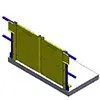
Industrial safety gates are commonly installed at ladder access points, roof hatches, mezzanine edges, loading docks, platforms, walkways, and other areas where workers are exposed to fall hazards.
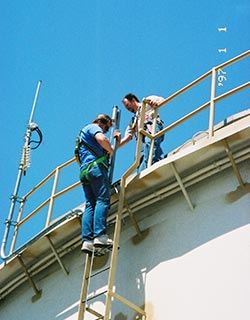
Ladder fall arrest systems are commonly installed on fixed ladders attached to water tanks, towers, utility poles, rooftops, mezzanines, roof hatches, and industrial structures where workers must climb to elevated locations.
Safety gates are commonly installed at fixed ladder openings, rooftop access points, mezzanines, platforms, catwalks, maintenance areas, and elevated workspaces.
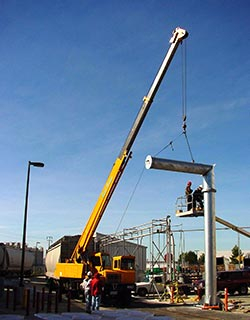
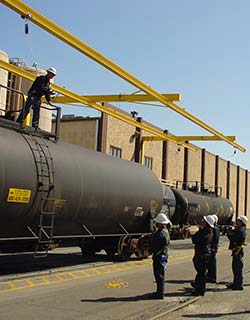
Overhead fall protection systems are commonly used in manufacturing facilities, warehouses, aircraft maintenance hangars, loading areas, transportation facilities, industrial plants, and maintenance operations.
Portable safety ladders are commonly used in manufacturing facilities, warehouses, distribution centers, transportation operations, aircraft maintenance, utility facilities, and industrial plants where temporary elevated access is required.
Roof horizontal lifeline systems are commonly used on commercial buildings, warehouses, manufacturing facilities, distribution centers, utility structures, and industrial rooftops where workers perform maintenance, inspections, or repairs.
FAQs
Skylight protection systems are commonly installed on commercial buildings, warehouses, manufacturing facilities, distribution centers, schools, hospitals, and industrial rooftops where skylights are present.
Warning line systems are commonly installed on commercial, industrial, and facility rooftops where workers perform maintenance, inspections, or other tasks near roof edges and openings.
Guardrail systems can be installed around roof edges, roof hatches, skylights, equipment access areas, mezzanines, loading docks, and other elevated work locations.
Roof fall protection is commonly used in commercial construction, manufacturing facilities, warehouses, distribution centers, utilities, telecommunications, energy facilities, and property maintenance operations.
FAQs
In most cases, the employer is responsible for identifying fall hazards, selecting compliant systems, providing training, and ensuring proper use — this is a core theme throughout OSHA’s fall protection framework.
FAQs
Authorized Person Training is recommended for employees who work at heights and use fall protection systems as part of their daily job responsibilities.
Recommended for: Managers, Immediate Supervisors of authorized persons, or Individuals working at heights. Includes Competent Person and Competent Inspector
Recommended for: All individuals who are working at heights. Training required for employees who will be working first hand with the fall protection systems and devices
Recommended for: Individuals who are responsible for training Authorized Persons. Includes the Competent Person Training and Competent Inspector courses