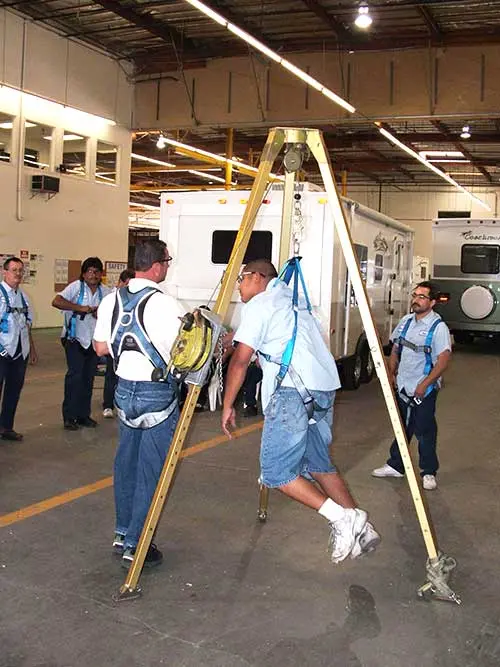
Recommended for: Managers, Immediate Supervisors of authorized persons, or Individuals working at heights. Includes Competent Person and Competent Inspector
Recommended for: All individuals who are working at heights. Training required for employees who will be working first hand with the fall protection systems and devices
Recommended for: Individuals who are responsible for training Authorized Persons. Includes the Competent Person Training and Competent Inspector courses
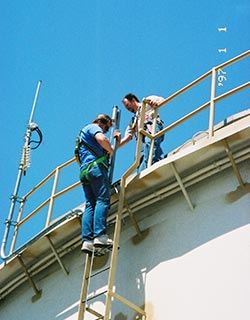
A portable safety ladder is a movable access solution designed to provide safe access to elevated work areas, equipment, platforms, vehicles, and maintenance locations. These ladders can be relocated as needed and often include safety features such as handrails, guardrails, and slip-resistant steps.
A rigid rail system uses a fixed overhead rail and trolley assembly that allows workers to move freely while remaining continuously connected to a fall protection anchorage point.
A roof hatch safety system is a fall protection solution designed to protect workers when accessing rooftops through roof hatch openings by providing guardrails, safety gates, grab bars, and protective barriers around the hatch area.
A roof horizontal lifeline system is a fall protection system that consists of a horizontal cable or rail installed across a roof, allowing workers to remain connected while moving safely across elevated work areas.
FAQs
A roof skylight guard is a protective safety system designed to prevent workers from falling through skylights and roof openings while performing maintenance, inspections, or other rooftop activities. It helps improve workplace safety and supports OSHA fall protection requirements.
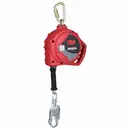
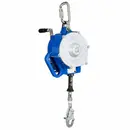
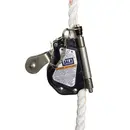
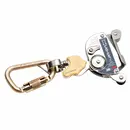
A self-retracting lifeline, commonly called an SRL, is a fall-arrest device with a lifeline that extends and retracts as the worker moves. During normal movement, the line remains under light tension. If a fall occurs, an internal braking mechanism locks the lifeline and helps arrest the fall. The SRL must be compatible with the worker's full-body harness, anchorage, work environment, and required fall clearance.
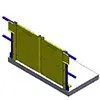
A single opening cantilever gate is designed for smaller loading dock openings and overhead door applications. It opens upward rather than swinging outward, helping preserve valuable floor space while providing fall protection.
A split opening cantilever gate is designed for wider dock openings and larger truck bays. The system provides fall protection while allowing easy access for loading and unloading operations.
A warning line system is a visual barrier designed to identify hazardous roof areas, leading edges, and openings. It helps keep workers away from fall hazards and supports OSHA-compliant rooftop safety practices.
An industrial safety gate is a self-closing barrier designed to protect workers from fall hazards at ladder openings, roof hatches, mezzanines, loading areas, and other elevated access points.
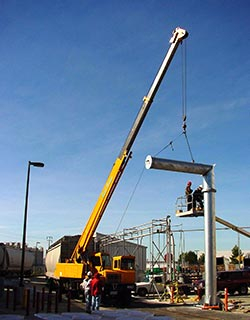
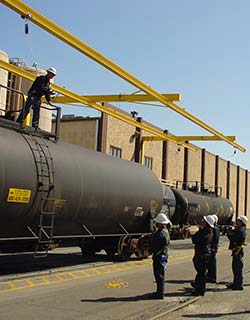
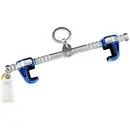
An overhead fall protection system is an elevated anchorage solution that allows workers to connect personal fall arrest equipment to a secure overhead structure, helping reduce fall risks while working at height.
FAQs
ANSI (American National Standards Institute) is an organization that develops voluntary consensus standards for workplace safety, including fall protection systems, equipment, training, and safety procedures.
FAQs
ANSI Z359 is a fall protection code that establishes requirements for personal fall arrest systems, subsystems, components, training, rescue planning, and equipment performance.
FAQs
Fall protection training is a safety program that teaches workers how to recognize fall hazards, properly use fall protection equipment, and follow OSHA and ANSI requirements when working at height.
Warning line system kits are typically supplied complete with stanchions, bases, and high-visibility flags or pennants needed for installation and hazard demarcation.
OSHA fall protection refers to the regulations, requirements, and safety practices established by the Occupational Safety and Health Administration (OSHA) to protect workers from fall hazards in the workplace.
Roof fall protection refers to systems, equipment, and safety solutions designed to help protect workers from falls while performing tasks on rooftops, elevated structures, and building surfaces.
FAQs
Non-penetrating systems help eliminate the need to drill into the roof structure, reducing the risk of roof leaks, preserving warranties, and simplifying installation.
An overhead anchorage helps minimize free-fall distance, reduces swing-fall hazards, improves worker mobility, and provides continuous fall protection throughout the work area.
A cable fall arrest system uses a vertical cable lifeline and traveler, while a rigid track system uses a fixed rail and trolley that automatically follows the worker during ascent and descent for hands-free climbing.
Recommended for: Managers, Immediate Supervisors of authorized persons, or Individuals working at heights. Includes Competent Person and Competent Inspector
Recommended for: All individuals who are working at heights. Training required for employees who will be working first hand with the fall protection systems and devices
Recommended for: Individuals who are responsible for training Authorized Persons. Includes the Competent Person Training and Competent Inspector courses