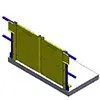
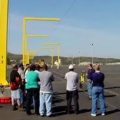
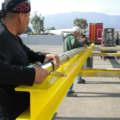
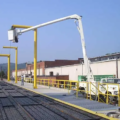
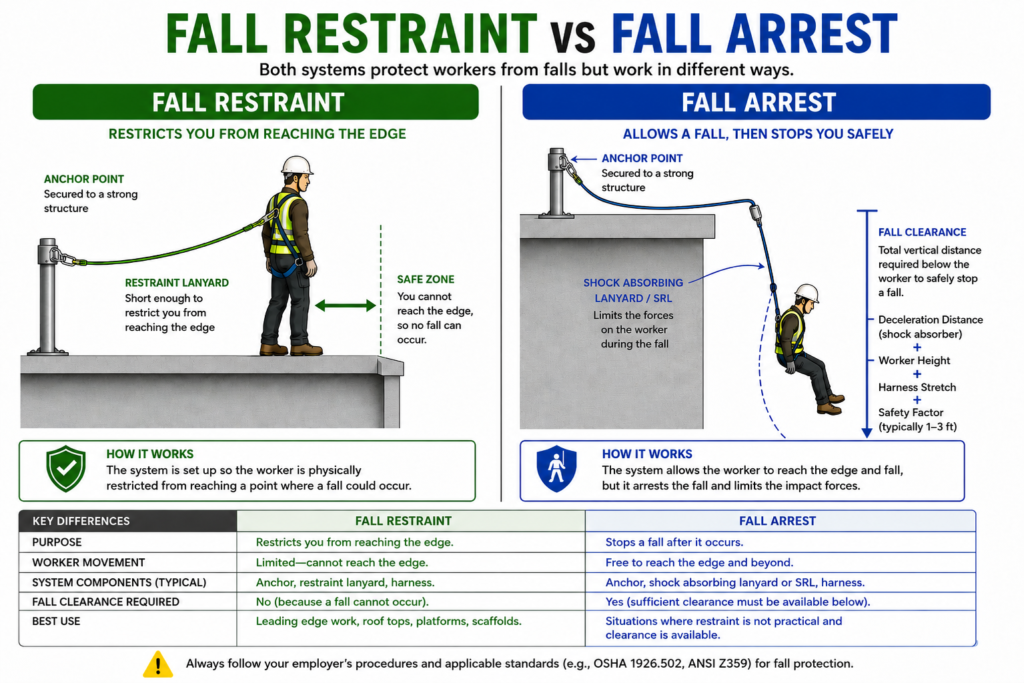
- The worker can move freely, including over or near the fall hazard
- The system activates after a fall begins, catching the worker mid-fall
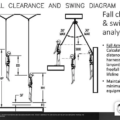
- OSHA requires free fall be limited to 6 feet, with total fall arrest (including deceleration) within about 9.5 feet
- Requires a full harness, deceleration device, and verified clearance to a lower level
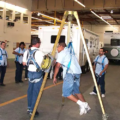
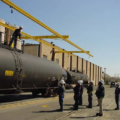
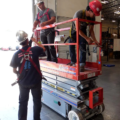
- More common on structures, towers, ladders, and elevated platforms
|
- The tether/lanyard is short enough that the worker physically cannot reach the hazard edge
- No fall ever happens — it is entirely restrictive
- Because no fall occurs, there’s no arrest force on the body
- Simpler to implement in some cases, but limits worker mobility
- Typically used on flat roofs and leading-edge work where the hazard is predictable
|