





Frequently Asked Questions
What are the Cal-OSHA Compliant standards and codes for guardrail/railing systems?
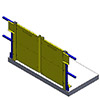
Cal-OSHA fall protection guardrails are subject to strict requirements, primarily outlined in the California Code of Regulations. Key standards include a top rail height of 42–45 inches above the walking surface, a requirement for a midrail or equivalent, and a minimum strength of 20 pounds per linear foot for a live load. Posts must be spaced no more than 8 feet apart on center.
- Title 8, Section 3209: Standard Guardrails. More strict than the federal rules for guardrails and roof fall protection systems.
- Title 8, Section 1620: Design and Construction of Railings. More strict than the federal rules for guardrails and roof fall protection systems.
Visit: CAI Safety Systems Guardrail Fall Prevention Systems
What are the OSHA/ANSI anchorage (anchor point) requirements?
For personal fall arrest / personal fall protection anchorages, OSHA generally requires anchor points to be either:
- Rated to 5,000 lb per worker attached, or
- Engineered as part of a complete system with a safety factor of at least 2, under the supervision of a qualified person. OSHA.gov
Related CAISS resources:
What are the OSHA Compliant standards and codes for guardrail/railing systems?
- 29 CFR 1910.29: General industry standard for fall protection systems and falling object protection.
- 29 CFR 1926.502: Criteria and practices for fall protection systems in construction.
- 29 CFR 1926.501: Duty to have fall protection, including when working at the edges of excavations or over dangerous equipment.
What is the difference between a “Competent Person” and a “Qualified Person”?
Competent person: Someone capable of identifying hazards and authorized to take prompt corrective measures.
Qualified person: Someone with a recognized degree/certificate/professional standing, or extensive knowledge/training/experience, who has demonstrated ability to solve problems related to the work or project (commonly the person who designs/engineers systems).
Related CAISS resources:
What is the OSHA “Walking-Working Surfaces” standard?
OSHA updated its Walking-Working Surfaces rules (general industry, 29 CFR 1910 Subpart D & related fall protection rules) with a final rule published in November 2016 and effective January 2017, aimed at reducing slip/trip/fall hazards.
What’s included with CAISS In-house User Equipment Inspection?
If you have a fall protection system that requires a full body harness and tying off to an anchor or horizontal lifeline, you are required by law, and the manufacturer of the equipment, to adhere to strict inspection, use, and maintenance requirements. At CAI Safety Systems, our competent inspectors conduct comprehensive functional tests on the fall protection equipment to ensure that it is operating properly and that all components are working together as intended.
NOTE: CAISS does not repair your equipment in this inspection program. We will provide you with suggestions on the necessary repair, replacement, or modification of the equipment on inspection completion in a detailed report.
- Functionality: Our inspector will conduct a functional test of the fall protection system to ensure that it is operating properly and that all components are working together as intended.
- Tag-Out: If any defects or damage are found during the inspection, we will alert you and advise if the system needs to be taken out of service or may continue in use until repairs or replacement can be made.
- Replacements: We will provide a proposal if necessary to repair, replace, or modify any part of the fall protection system.
- Update Labels: The existing labels will be updated with the current inspection date for the benefit of all future users.
- Inspection Report: A report will be generated to provide an executive summary.
- Inspection reports for each component, identifying items that failed the inspection or are showing signs of wear and tear.
- If necessary, we will point out any current procedures that could be modified or added to improve safety and longevity of your system.
- We will provide a proposal if necessary to repair, replace, or modify any part of the fall protection system.
Related CAISS resources:
Who is responsible for providing fall protection?
In most cases, the employer is responsible for identifying fall hazards, selecting compliant systems, providing training, and ensuring proper use — this is a core theme throughout OSHA’s fall protection framework.