Sale!



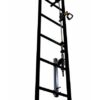
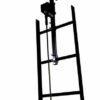
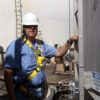
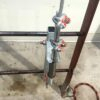
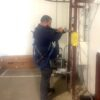
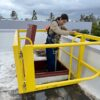
Ladder Cable Fall Arrest for Roof Hatch Ladder
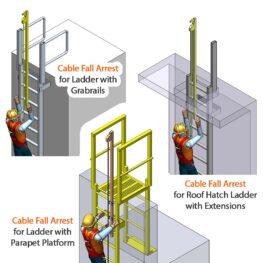
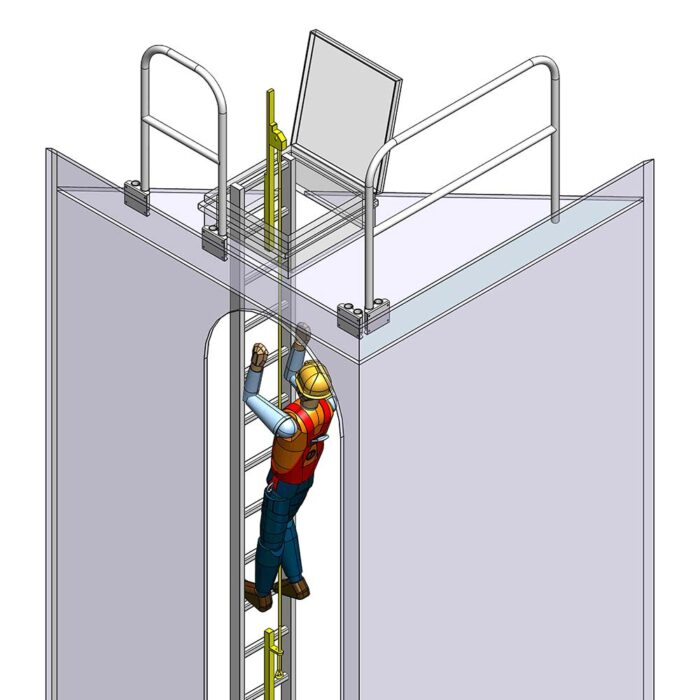
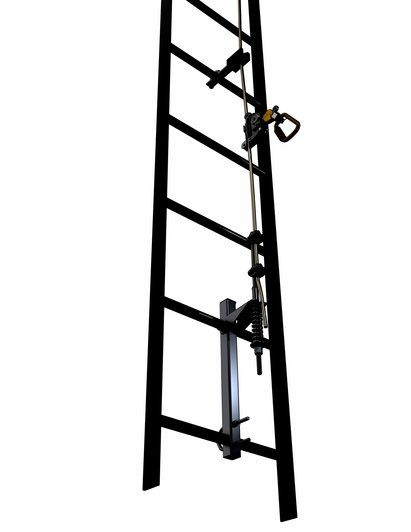
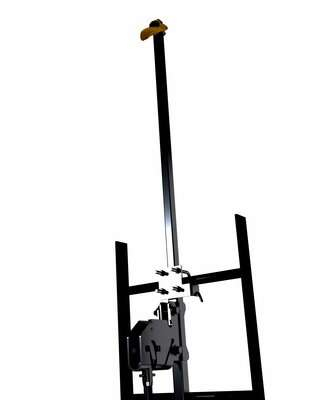
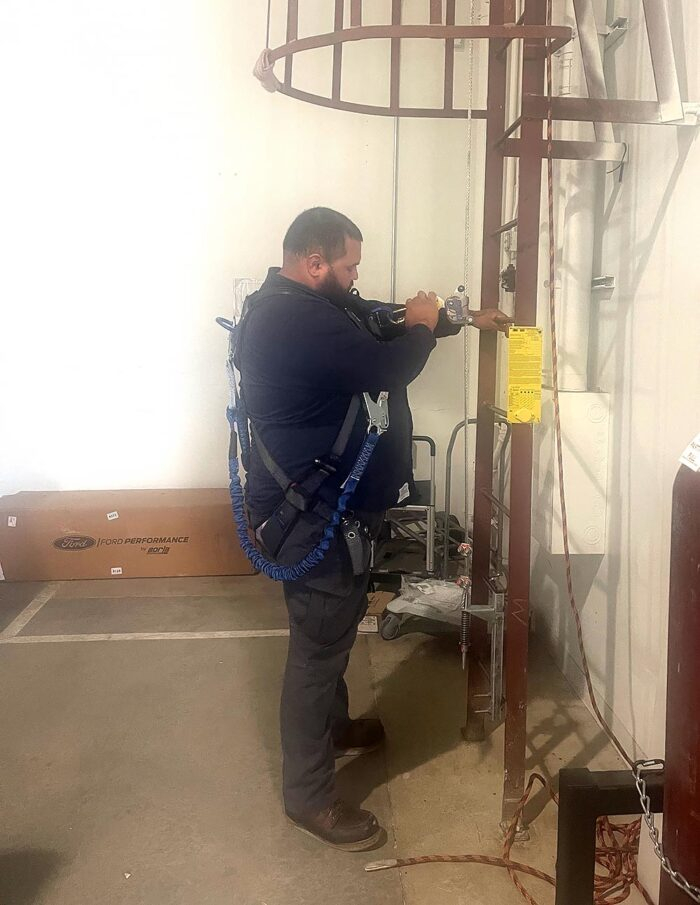
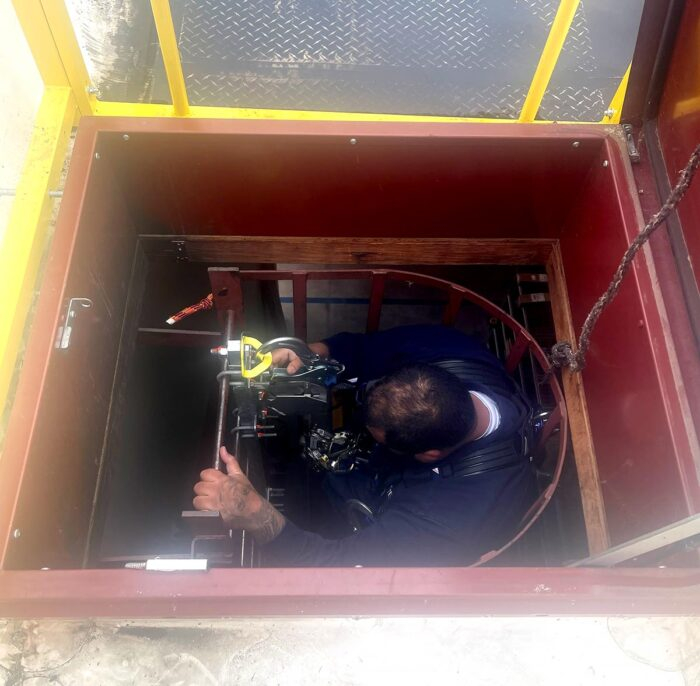
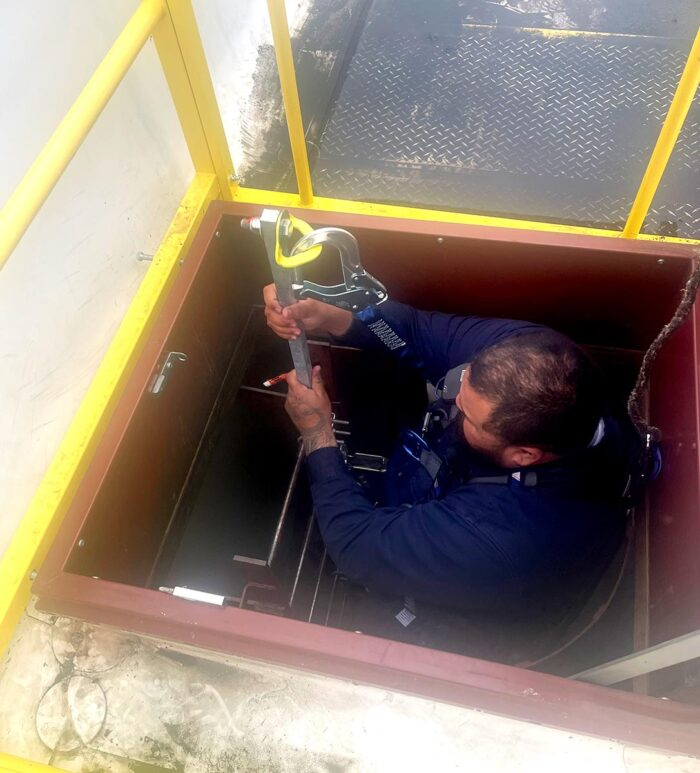
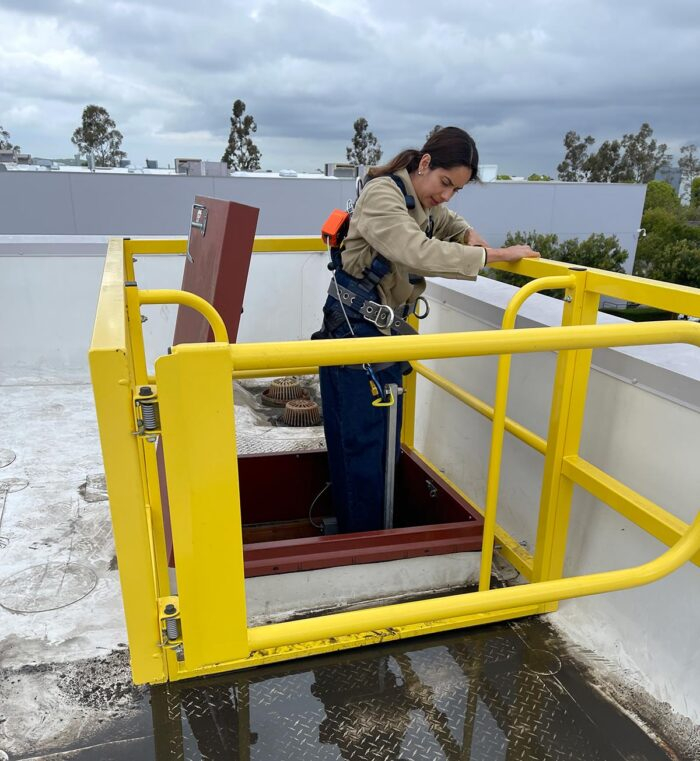
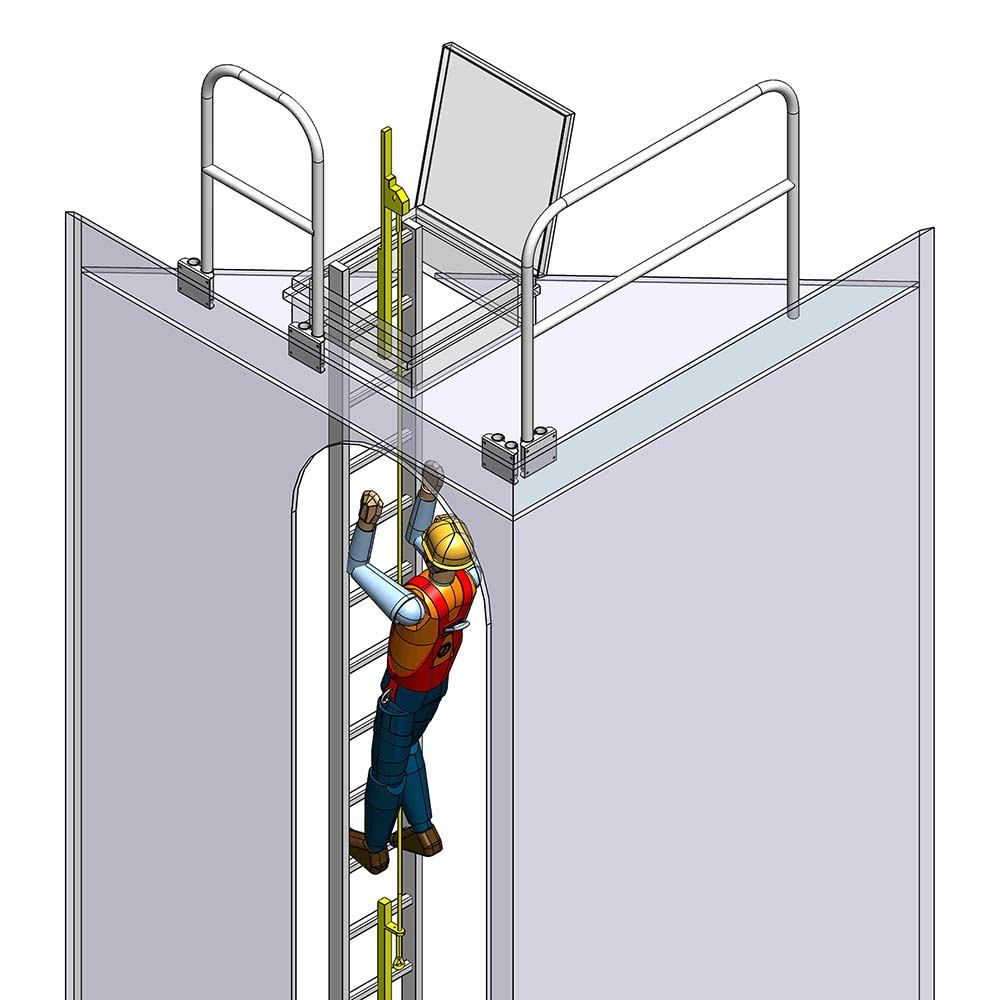
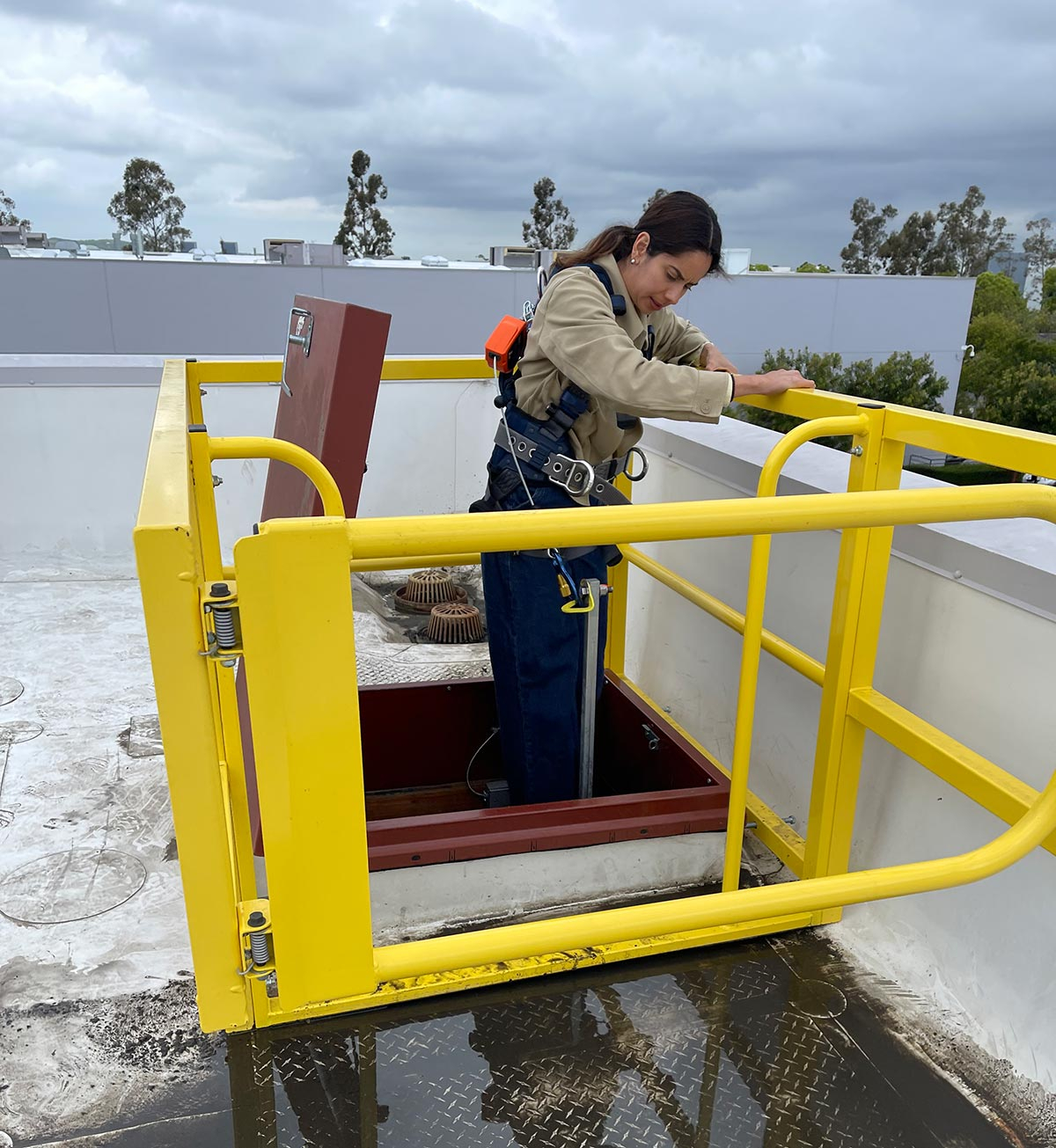
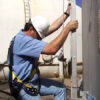
With CAI Safety’s Ladder Cable Fall Arrest for Roof Hatch Ladders , you have safety and security when climbing fixed ladders and transitioning to the upper level through the roof hatch. The design allows the cable system to be installed on the ladder, and being able to extend the telescoping post above the roof hatch while remaining attached to this post.
What components does this kit include ?
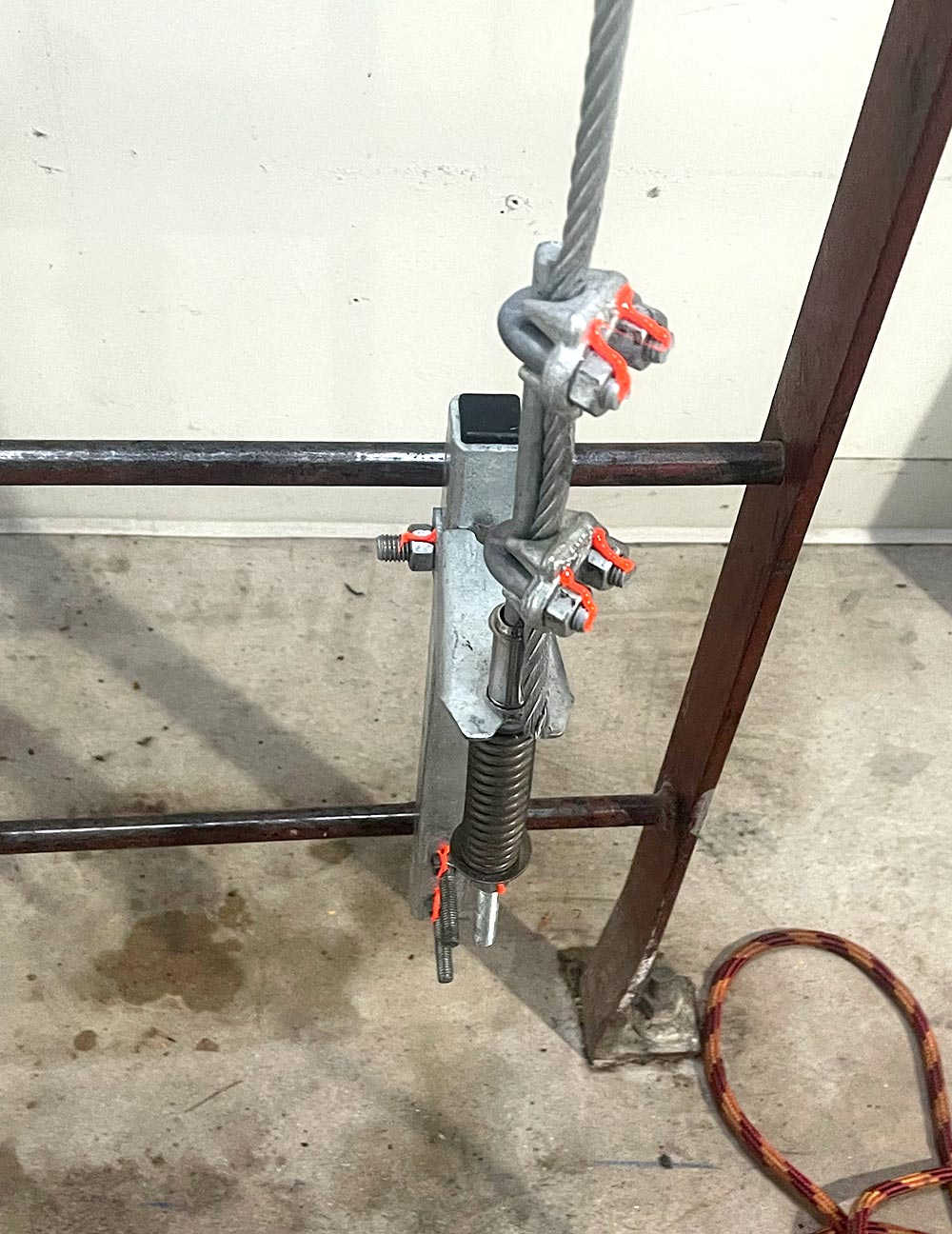
Kit Components: (1) Top & Bottom bracket with Telescoping Extension for Roof Hatch (Galvanized Steel only), (1) Galvanized Steel or Stainless Steel Cable choice of finish), Cable Guides (based on choice of length and finish),, (1) Cable Trolley/Sleeve (Zinc Plated Steel)
Please Note: The top and bottom brackets of this system are Galvanized Steel, and not Stainless Steel. Stainless Steel is not available for top/bottom brackets.
- System Description
- Components
- System Guidelines
- Ladder to Roof Transition
- Models
- Accessories
- Downloads
- OSHA Compliant Ladder Checklist
- REQUEST QUOTE
System Description
With CAI Safety’s Ladder Cable Fall Arrest for Roof Hatch Ladders you have safety and security when climbing fixed ladders and transitioning to the upper level through the roof hatch. The design allows the cable system to be installed on the ladder, and being able to extend the telescoping post above the roof hatch while remaining attached to this post. This system is ideal for climbing long indoor and outdoor ladders that reach up to a roof hatch to safely climb out through the hatch.
Features & Benefits:
- Designed to meet the requirements of the new ANSI Z359.16 standard, along with OSHA 1910.140 and 1926.502
- Ladder Detachable Cable Trolley/Sleeve included with system.
- Galvanized Steel and Stainless Steel system options.
- Telescoping Single Point anchor extends 30”.
- Ladder Detachable Cable Sleeve included with the system.
- Re-engineered to simplify and speed up the installation process.
- Light – weighs less than our previous systems.
- 100% tie-off capability: Integrated fall arrest-rated anchor point on top bracket rated to 3,600 lbs.
- Flexible: Mounting brackets can be used on a variety of fixed ladder styles that may consist of different rung spacing and shapes
- Ideal for applications requiring egress off of ladder onto a platform
- Ordering is easy – top and bottom brackets sold together as a system in a single SKU.
- We offer other Ladder Fall Arrest Systems with rigid tracks and cables to suit your application.
Components
Includes: Top & Bottom bracket, Galvanized 3/8″ (9.5mm) Cable, Cable Guides, Telescoping Extension/Pole, Cable Trolley/Sleeve
- (1) Top & Bottom bracket with Telescoping Extension for Roof Hatch (Galvanized Steel)
- (1) Galvanized Steel 3/8″ (9.5mm) Cable or Stainless Steel 3/8″ (9.5mm) Cable (based on choice of finish)
- Cable Guides (based on choice of length and finish)
- (1) Cable Trolley/Sleeve (Zinc Plated Steel)
Finish: Galvanized Steel Cable Lifeline / Stainless Steel Cable Lifeline
Optional Accessories:
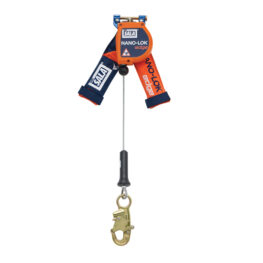
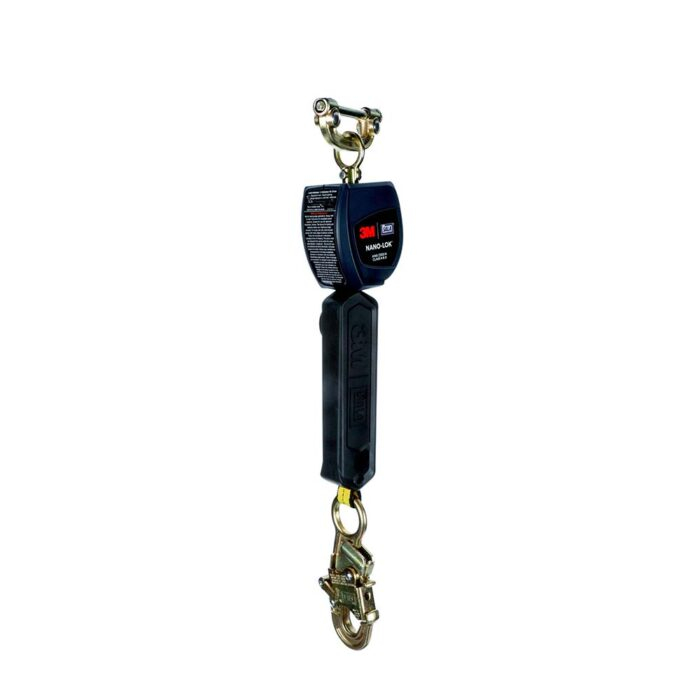
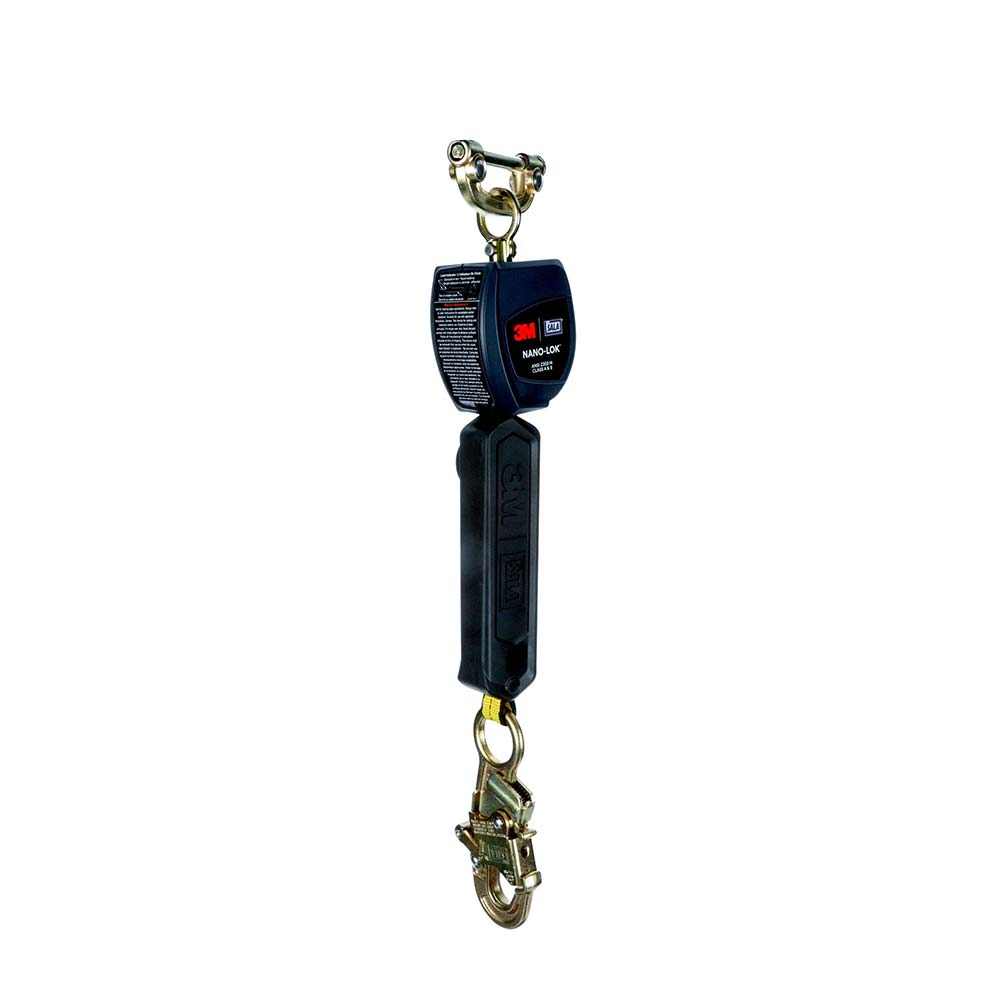
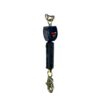
- Nano-Lok 6 ft. (1.8m) Self-Retracting Lifeline (Class A & B)
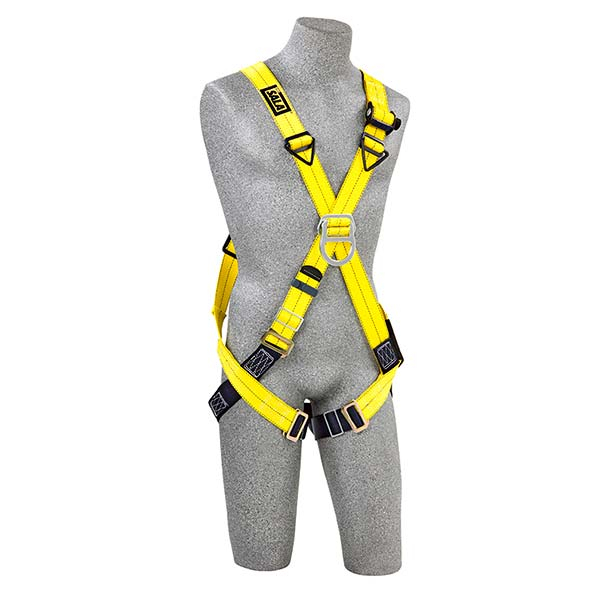
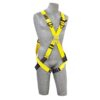
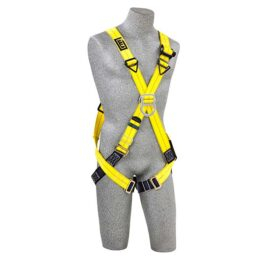
- Delta Cross-Over Style Climbing Harness, Chest & Back D-rings, Universal Size
Compliance: Meets OSHA 1910.140 and 1926.502, ANSI Z359.16 standard, CSA Z259.2.5, and CE (EN353-1:2014+A1:2017) requirements.
Rated for: 2 Users
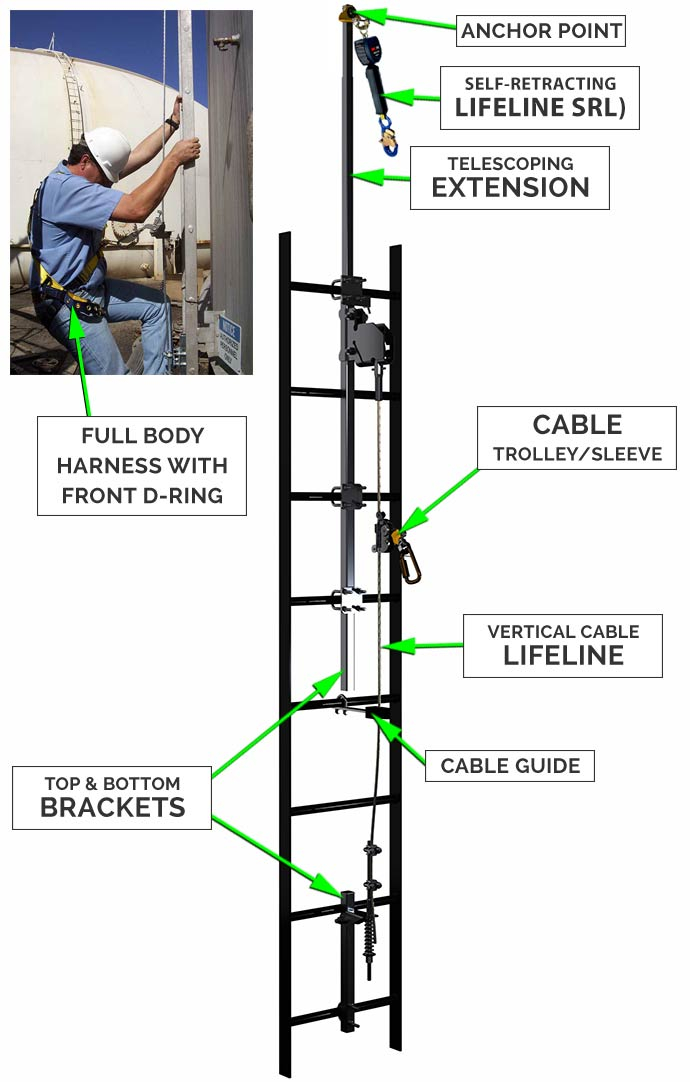 |
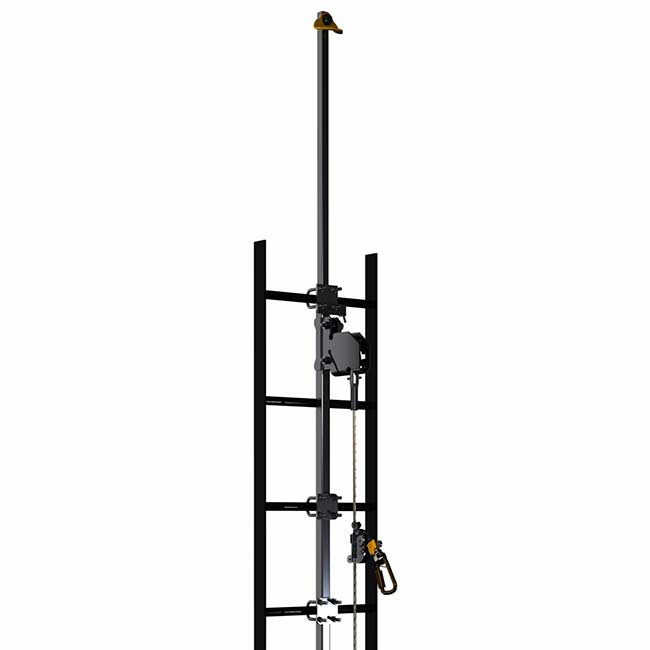
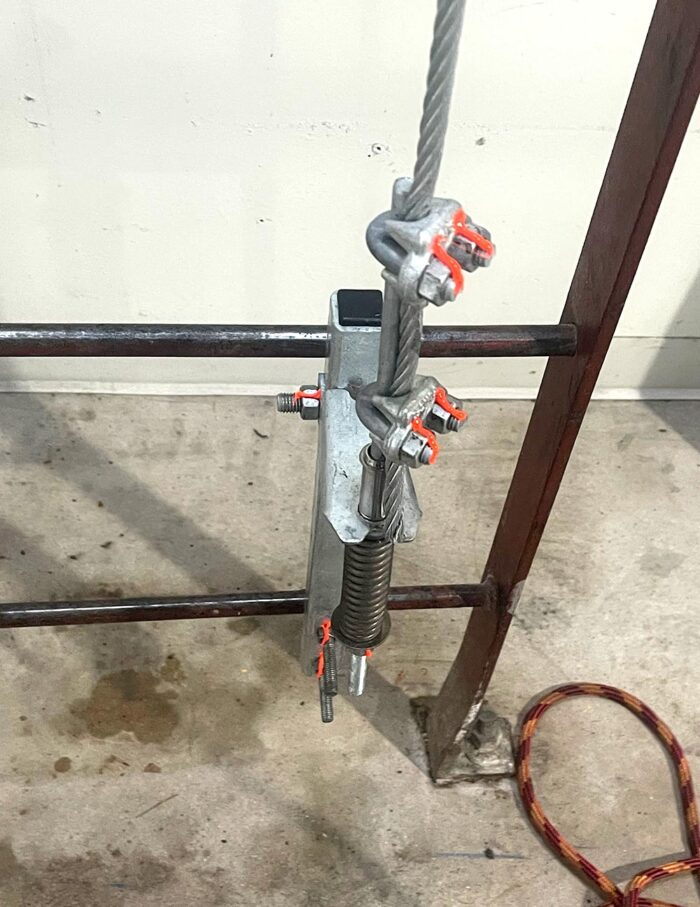
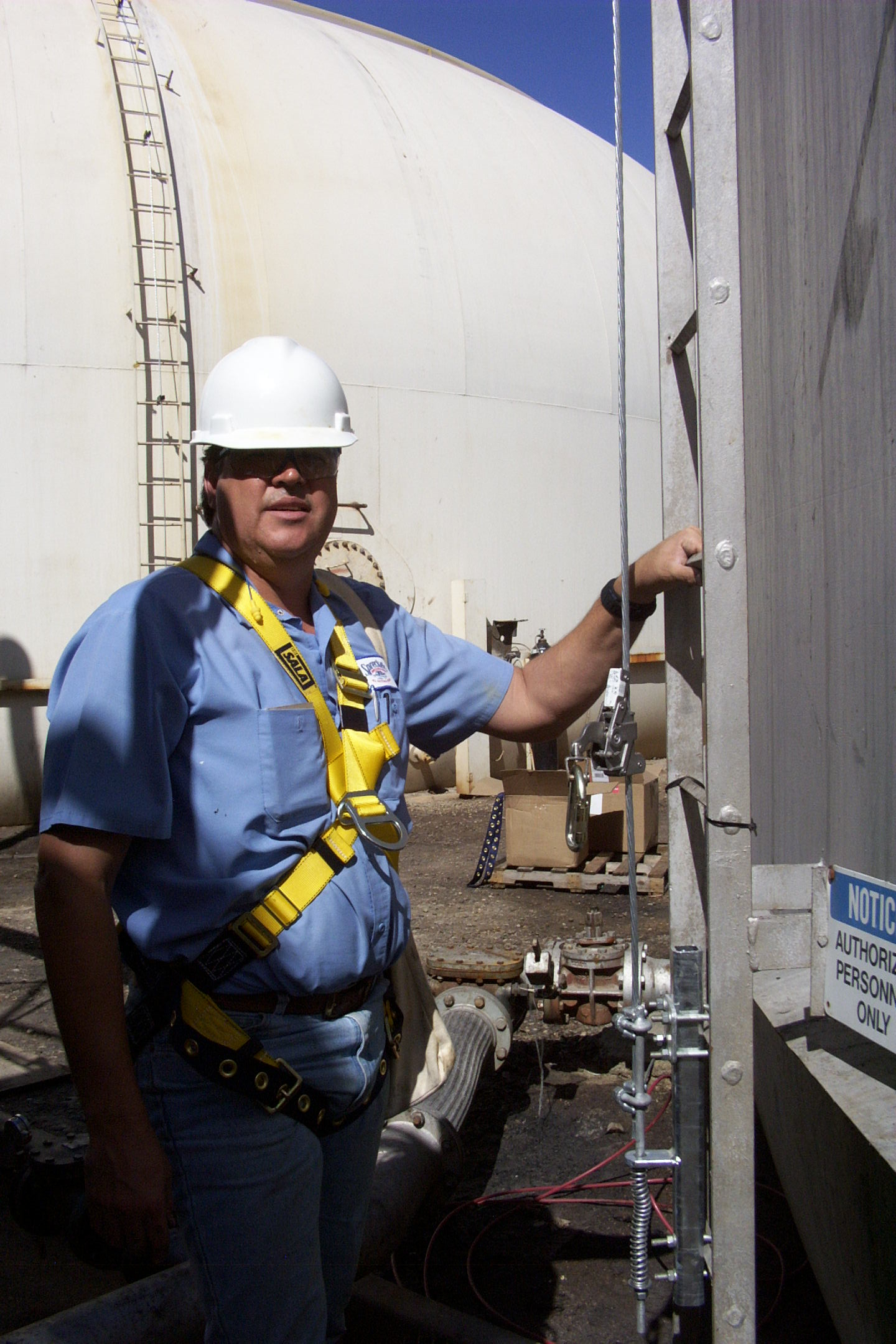
Vertical Cable Lifeline – The cable will be a stranded galvanized steel or stainless steel cable that can be fitted on straight and curved ladders. User remains secured to the cable system for the entire length of the ladder. |
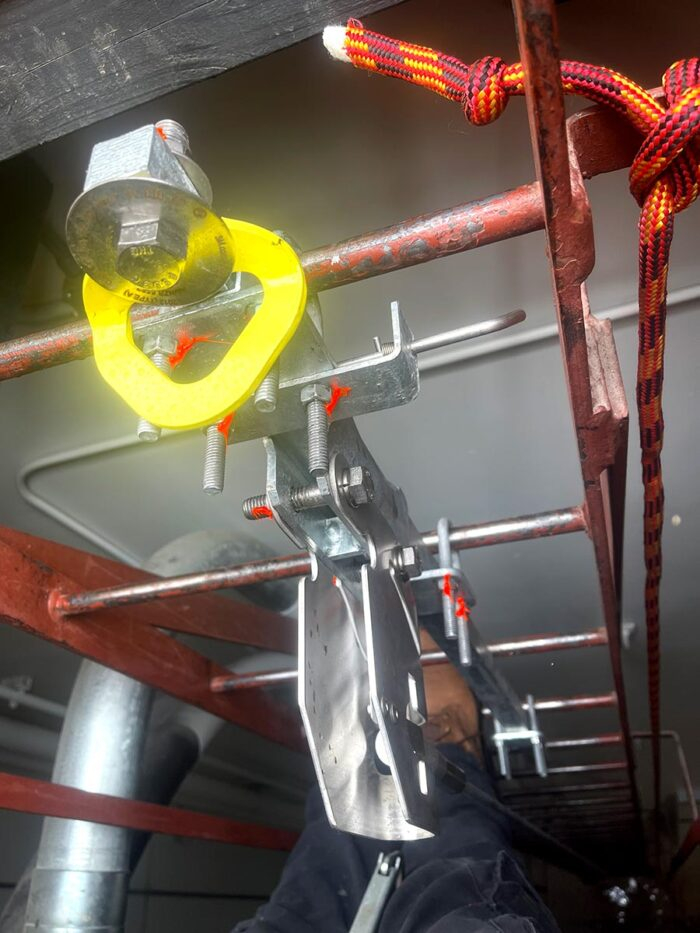
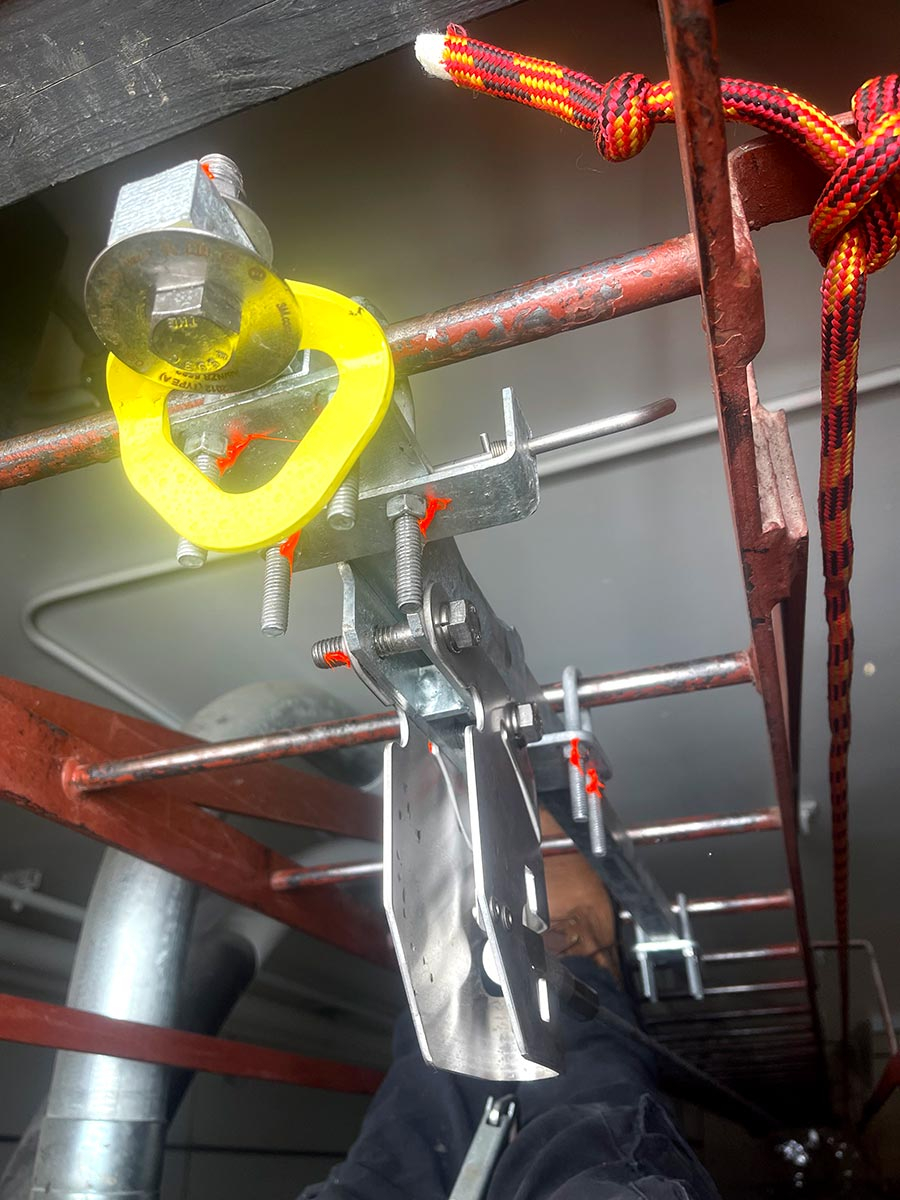
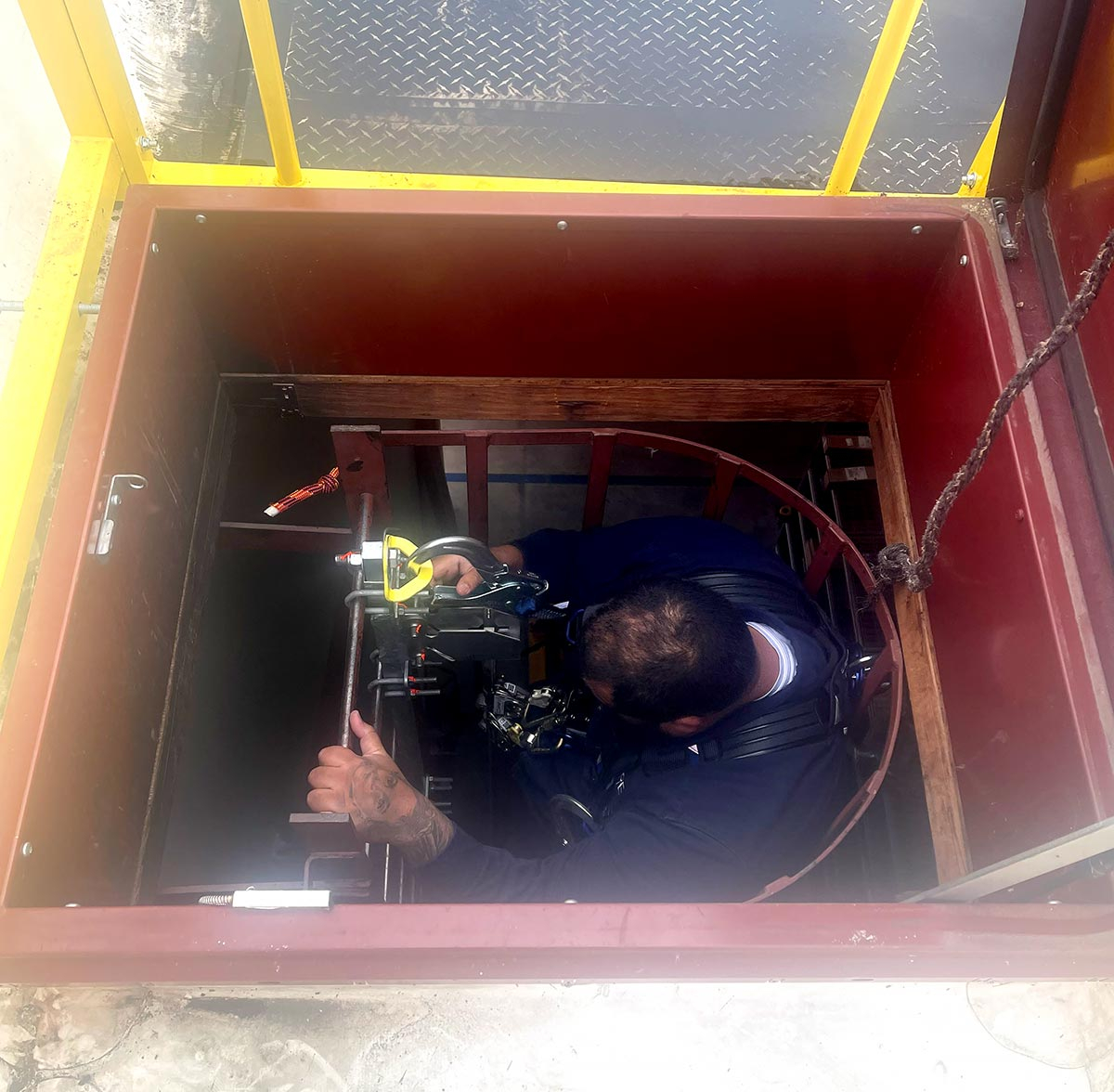
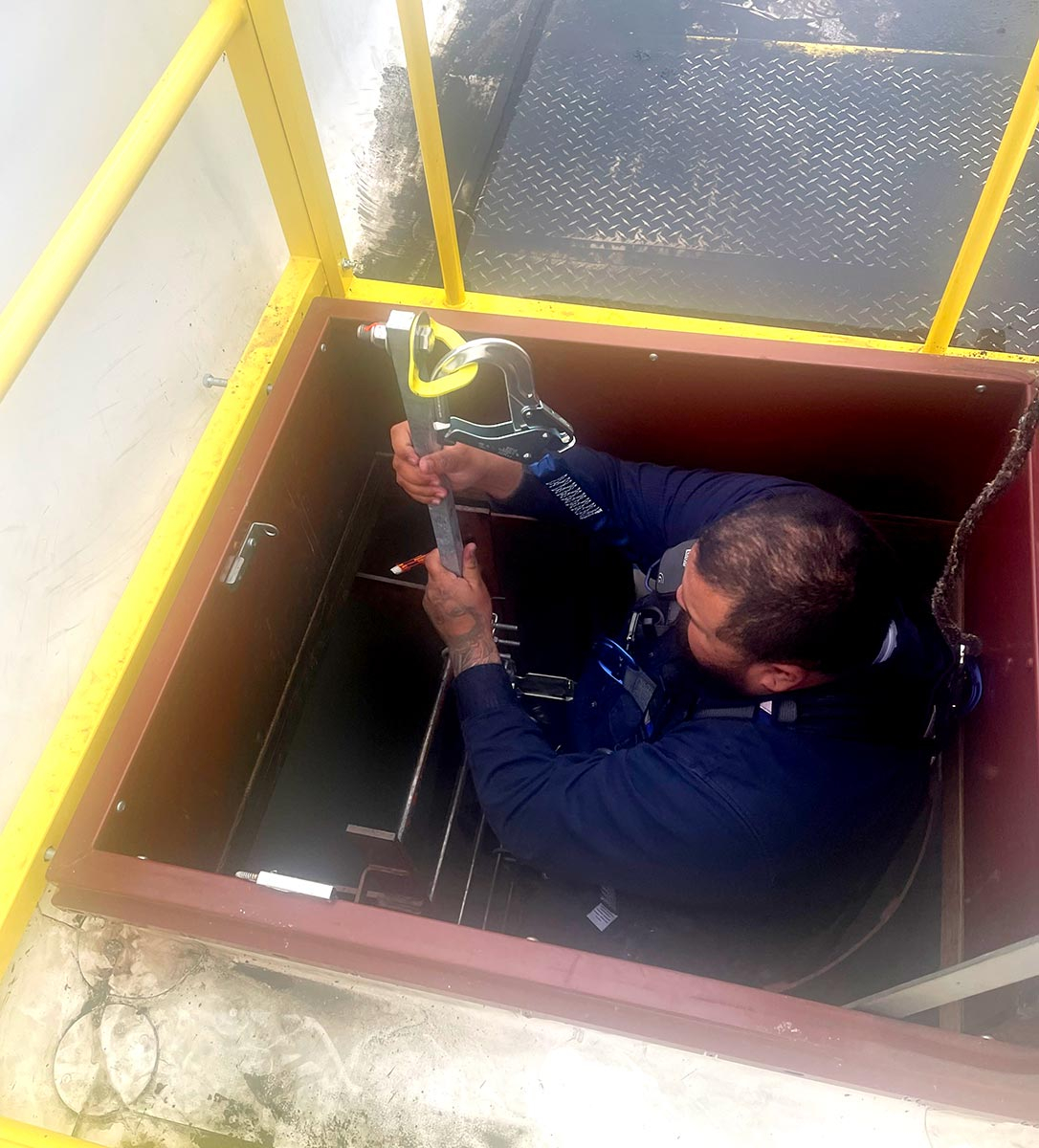
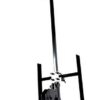
| Telescoping Extension/Pole – The telescoping pole extends three feet above the highest ladder rung. This allows the user to safely access or exit the hatch by attaching to the fall arrest anchor (self-retracting lifeline) on top of the telescoping post. The telescoping single point anchor extends 30”. | |
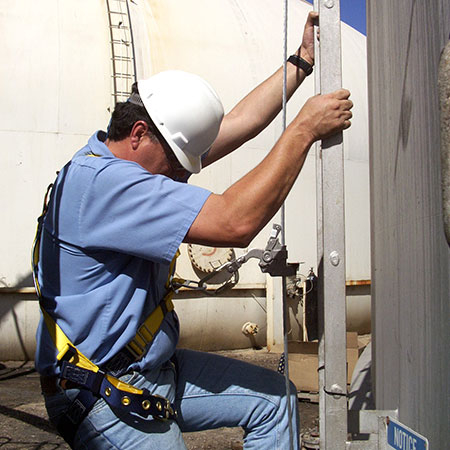
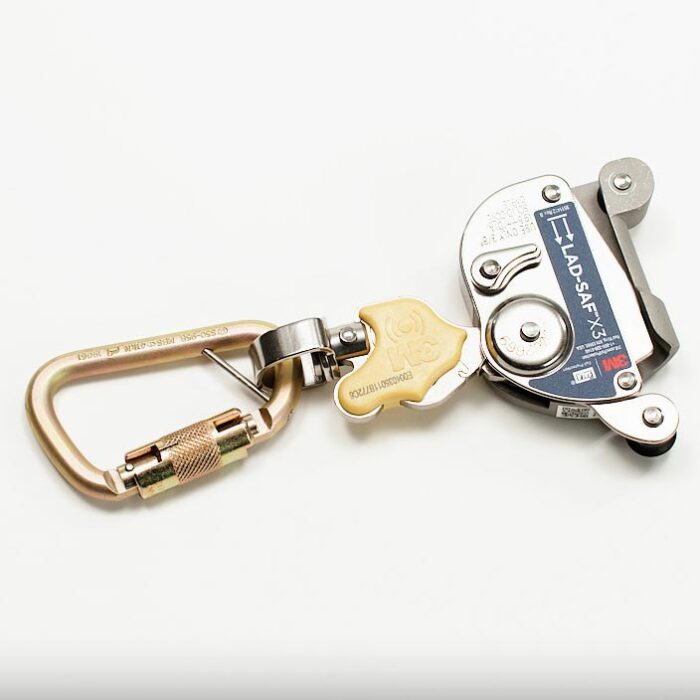
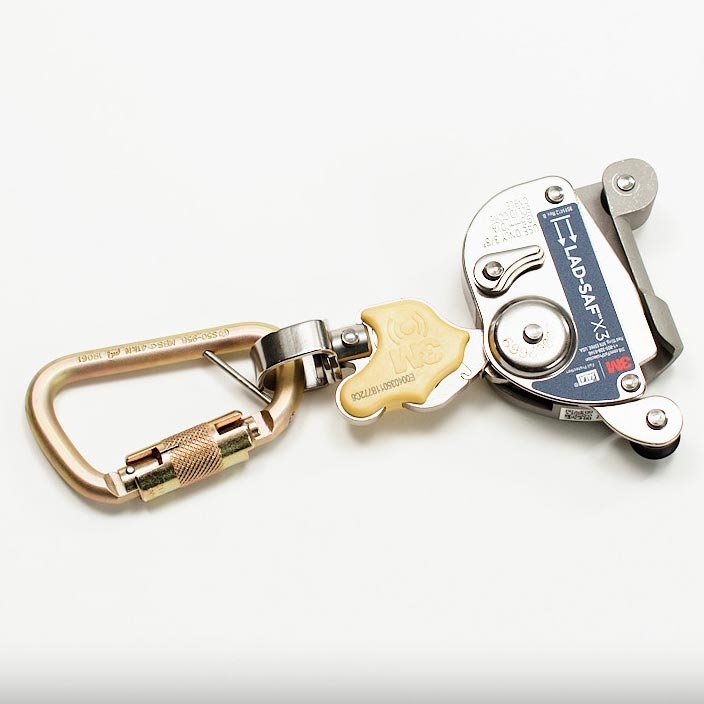
| Cable Trolley (Included with system) – The trolley is designed to follow the user along the lifeline while ascending or descending and instantly lock in the event of a fall. Integrated with stainless steel shock-absorbing element that includes an impact indicator so that user can confirm system is safe prior to use. | |
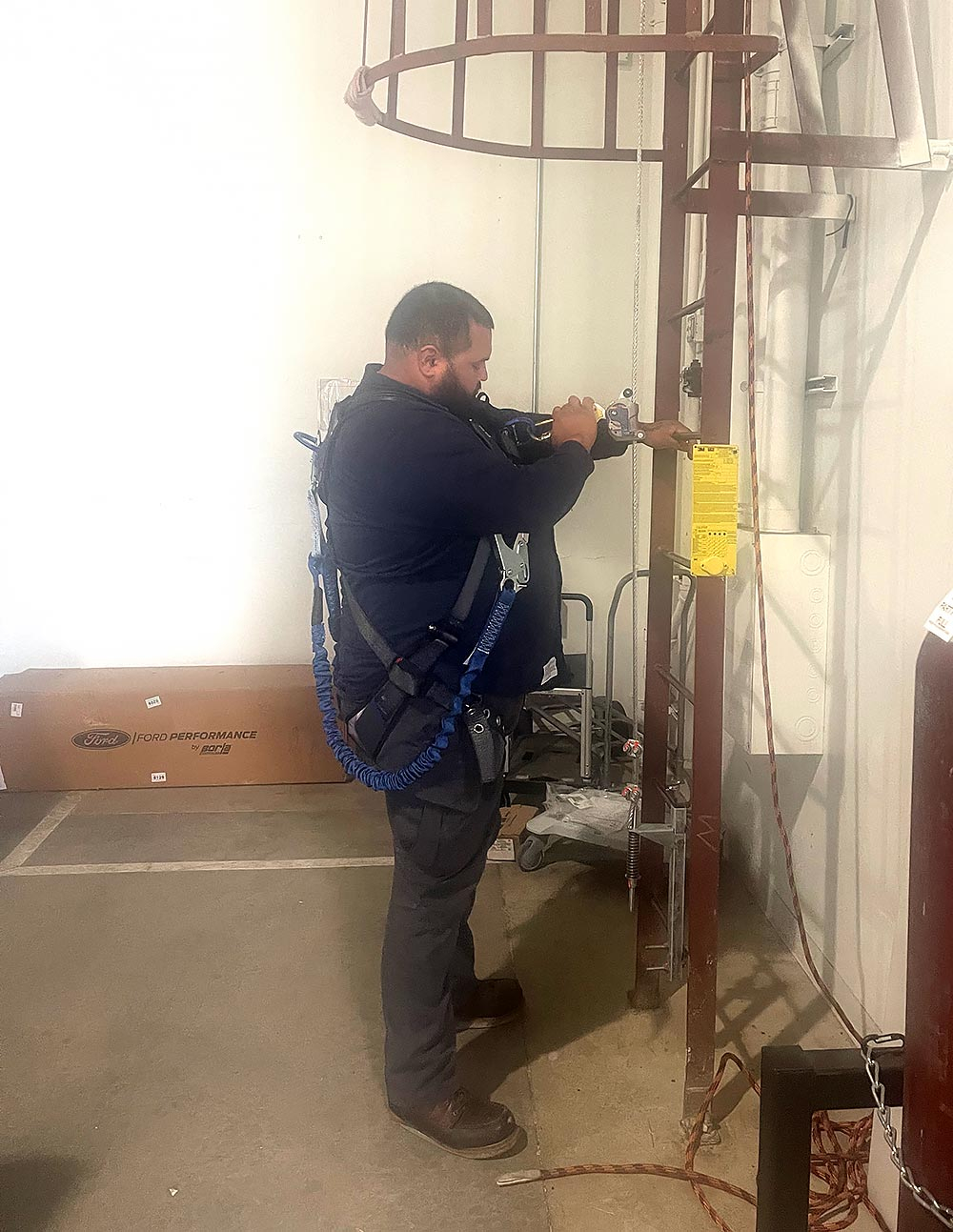
| Nano-Lok 6 ft. (1.8m) Self-Retracting Lifeline/Device (Class A & B) (CSS-3100526) – [OPTIONAL] [REQUIRED FOR THIS SYSTEM IF YOU DON’T ALREADY HAVE ONE] Nano-Lok™ self-retracting lifelines are ergonomically designed for ease of use and is ideal for direct connection to most harnesses. The extremely compact and lightweight design is virtually unnoticeable on your back, staying out of the worker’s way and making it ideal as a lanyard replacement. Buy Individually → Usage: When a user ascends the ladder, the user is tied-off to the cable system via the trolley system. Once the user reaches the top of the ladder, and is ready to exit the roof hatch, the user ties off to the already connected SRL device at the top anchor point of the extension pole. Once connected to this device, the user can now disconnect from the cable system trolley, to climb out off the roof hatch. |
|
| Full Body Harness w/ Front D-Ring (Universal Size) (CSS-1102010) – [OPTIONAL] Designed to meet the durability, all-day comfort and safety requirements while working at heights on a construction site, use heavy-duty webbing that is almost twice as strong as the standards require. The Ladder Fall Arrest System requires the user to tie-off to the front d-ring of the harness. The harness distributes the load of the fall on the users body. Buy Individually → |
System Guidelines
Please follow the following guidelines to ensure you use this system as per the manufacturer’s instructions:
PLEASE NOTE: The top and bottom brackets of this system are Galvanized Steel, and not Stainless Steel. Stainless Steel is not available for top/bottom brackets.
- Ladder Structure: Ladder structure must be certified by a qualified person to support 2700 lbs.
- Capacity: One person with a combined weight (clothing, tools, etc.) of no more than 310 lbs. (140 kg) 1 per person.
- Self-retracting Lifeline (SRL) Maximum Arresting Force: 1,350 lbs. (6 kN)
- Telescoping Pole Anchor: The telescoping pole will extend single point anchor to 30” (0.76m). The pole serves as a single point anchor for a single user attachment. Minimum breaking strength is 3,600 lbs. (16kN). Conforms to OSHA 1926.502 and 1910.140.
- Trolley/Sleeve: Used as a Sleeve in vertical systems. Allows the user to move freely up and down the system while maintaining attachment. Use only with supplied carabiner or snap hook.
- Full-body Harness: Requires a front D-Ring.
- Standards/Approvals: OSHA 1926.1053, 1910.29, ANSI Z359.16, CSA Z259.2.5
Ladder Cable Fall Arrest for Roof Hatch Ladder system will fit the following rung types and spacing:
| Spacing | 9″-12.25″ (200mm-310mm) |
| Cylindrical rung | 0.5″-1.6″ (13mm-40mm) diameter |
| Square rung | 0.5″-1.6″ (13mm-40mm) |
| Diamond rung | 0.5″-1.6″ (13mm-40mm) height |
| Angle Iron | 0.5″-1.6″ (13mm-40mm) leg height |
| Rectangular rung | 0.5″-1.6″ (13mm-40mm) height, 0.5″-1.9″ (13mm-48mm) width |
Ladder to Roof Transition
Ladder to Roof Transition Steps (ascending and descending ladder):
| Figure 1 | 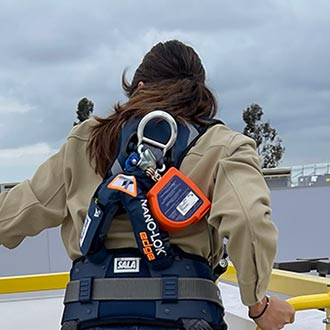 |
|
|---|---|---|
| Figure 2 | 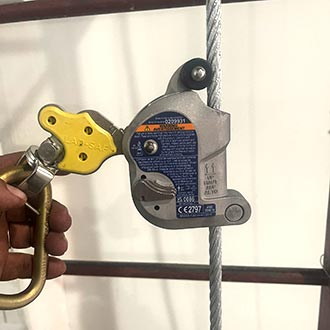 |
|
| Figure 3 | 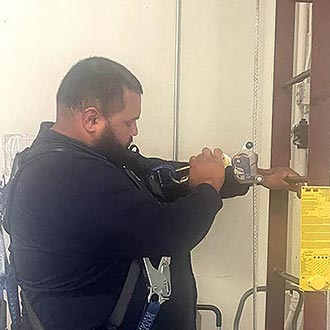 |
|
| Figure 4 | 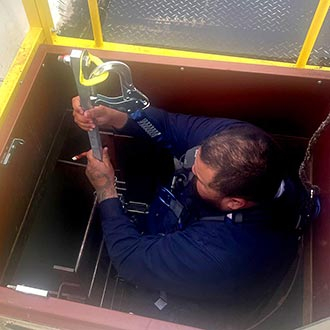 |
|
| Figure 5 | 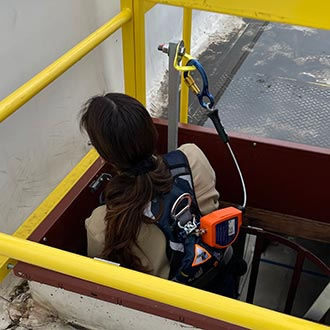 |
|
OPERATING PROCEDURES
- Never use the system for any other purpose than to arrest a user’s fall. If the system is used for anything else such as, rigging/lifting equipment, it must be taken out of commission until inspected by a CAI representative or competent person as defined by ANSI Z359.0.
- A rescue plan must be in place in case a fall arrest occurs.
- 3M™ DBI-SALA® Lad-Saf Instructional Video – https://youtu.be/ZiCpTHjajcQ?si=EJ4lt_Hqdo6JxpDX
- 3M™ DBI-SALA® Lad-Saf™ Tutorial – https://youtu.be/g0njWDzb-og?si=-gUAYrUIo2JZp1FI
Models
| LADDER LENGTH (what you choose) |
SYSTEM LENGTH (what you get) |
CABLE FINISH | |
|---|---|---|---|
| 12 ft. or less | 15 ft. (4.5 m) | Galvanized Steel Cable or Stainless Steel Cable | 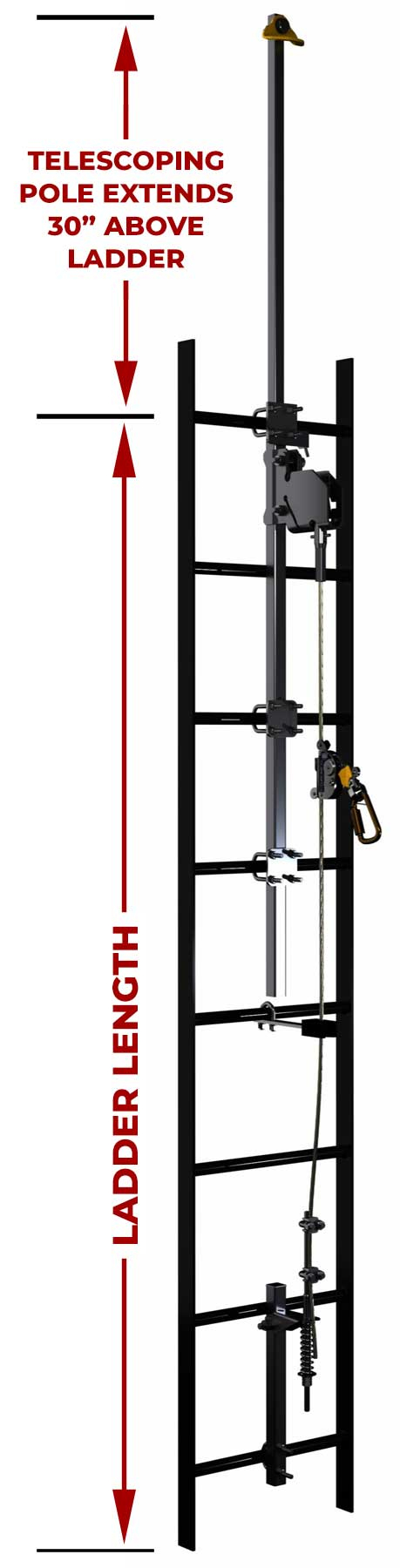 |
| 13 ft. to 17 ft. | 20 ft. (6 m) | Galvanized Steel Cable or Stainless Steel Cable | |
| 18 ft. to 27 ft. | 30 ft. (9.1 m) | Galvanized Steel Cable or Stainless Steel Cable | |
| 28 ft. to 37 ft. | 40 ft.(12.2 m) | Galvanized Steel Cable or Stainless Steel Cable | |
| 38 ft. to 47 ft. | 50 ft.(15.2 m) | Galvanized Steel Cable or Stainless Steel Cable | |
| 48 ft. to 57 ft. | 60 ft. (18.3 m) | Galvanized Steel Cable or Stainless Steel Cable | |
| 58 ft. to 67 ft. | 70 ft. (21.3 m) | Galvanized Steel Cable or Stainless Steel Cable | |
| 68 ft. to 77 ft. | 80 ft. (24.4 m) | Galvanized Steel Cable or Stainless Steel Cable | |
| 78 ft. to 87 ft. | 90 ft. (27.4 m) | Galvanized Steel Cable or Stainless Steel Cable | |
| 88 ft. to 97 ft. | 100 ft. (30.5 m) | Galvanized Steel Cable or Stainless Steel Cable | |
| 98 ft. to 107 ft. | 110 ft. (33.5 m) | Galvanized Steel Cable or Stainless Steel Cable | |
| 108 ft. to 117 ft. | 120 ft. (36.6 m) | Galvanized Steel Cable or Stainless Steel Cable | |
| 118 ft. to 127 ft. | 130 ft. (39.6 m) | Galvanized Steel Cable or Stainless Steel Cable | |
| 128 ft. to 137 ft. | 140 ft. (42.7 m) | Galvanized Steel Cable or Stainless Steel Cable | |
| 138 ft. to 147 ft. | 150 ft. (45.7 m) | Galvanized Steel Cable or Stainless Steel Cable |
Accessories
-
Sale!
 Fixed Vertical Ladder + Fall Arrest System Accessories, Full Body Harnesses, Ladder Cable Fall Arrest for Fixed Ladder Accessories, Ladder Fall Arrest Accessories, Ladder Cable Fall Arrest for Steel/Wood Pole Accessories, Ladder Cable Fall Arrest for Roof Hatch Ladder Accessories
3M Delta Cross-Over Style Climbing Harness, Front & Back D-rings, Universal Size
CSS-1102010Select Options This product has multiple variants. The options may be chosen on the product page -
Sale!
Fixed Vertical Ladder + Fall Arrest System Accessories, Regular SRL's, Ladder Cable Fall Arrest for Fixed Ladder Accessories, Self-Retracting Lifelines, Ladder Cable Fall Arrest for Roof Hatch Ladder Accessories
3M Nano-Lok 6 ft. (Class 1) Single-leg Self-Retracting Lifelines
CSS-SRL-8Select Options This product has multiple variants. The options may be chosen on the product page -
Sale!
Fixed Vertical Ladder + Fall Arrest System Accessories, System Specific Trolleys, Ladder Cable Fall Arrest for Fixed Ladder Accessories, Ladder Fall Arrest Accessories, Ladder Cable Fall Arrest for Steel/Wood Pole Accessories, Ladder Cable Fall Arrest for Roof Hatch Ladder Accessories
Cable Trolley/Detachable Cable Sleeve
Original price was: $924.00.$841.00Current price is: $841.00.CSS-6160054Add to cart


Downloads

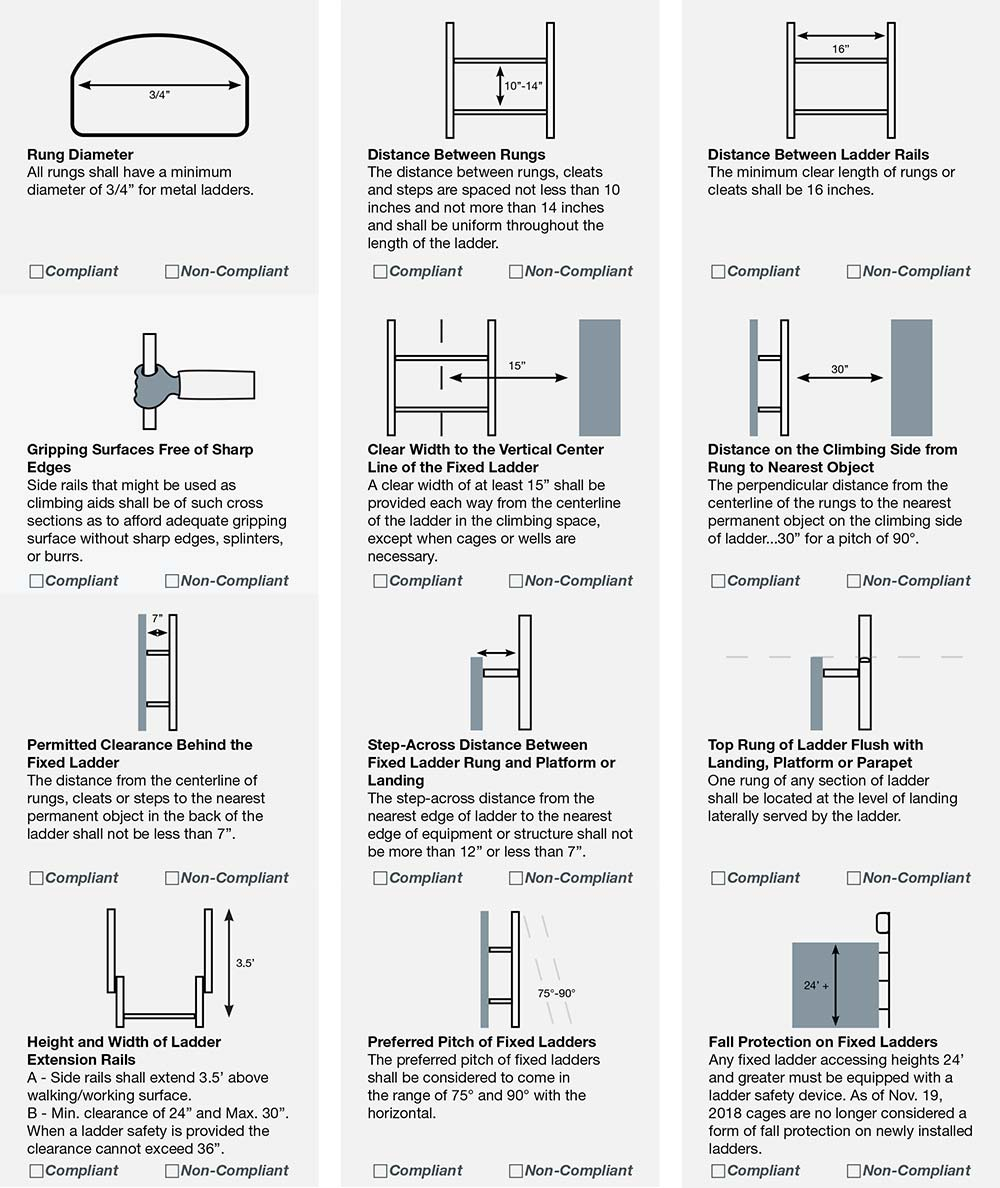
OSHA Compliant Ladder Checklist
If your response was “Non-Compliant” to any of the items below, your existing ladder may not be compliant or suitable to support a fall arrest system. In which case you may require to purchase an OSHA Compliant ladder with a Fall Arrest System at this link: Fixed Vertical Ladder & Ladder Cable Fall Arrest System
REQUEST QUOTE
By providing some basic information, we can provide you with a custom quotation or more product information. If you prefer to speak with a fall protection expert just call us at (951) 465-7386 x 303 or email us at webstore@caisafety.com These application and system specific forms are highly customized to help you provide system specific information about your fall protection requirements. REQUEST QUOTE
Related products
-
Sale!
3M Nano-Lok 8 ft. Leading Edge, Single-leg Self-Retracting Lifelines
CSS-SRL2-EDGESelect Options This product has multiple variants. The options may be chosen on the product page -
Fixed Vertical Ladder + Fall Arrest System
$3,510.00FXF-VLADDERS-FAChoose an option -
Sale!
Steel Pole & Wood Pole Cable Fall Arrest
CSS-LADSAF-SPWPSelect Options This product has multiple variants. The options may be chosen on the product page -
Sale!
3M Glyder 2 Sliding Beam Anchor (Beam Glyder)
CSS-BEAMGLYDERSelect Options This product has multiple variants. The options may be chosen on the product page