



Guardrail Systems & Safety Railings
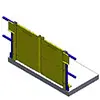
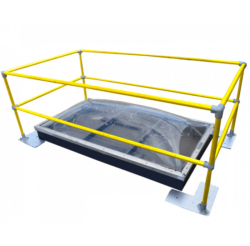
Working around unprotected roof skylights and floor openings is a major fall protection hazard that can be safely protected with our Roof Skylight Systems. These systems have a freestanding, non-penetrating design that allows you to easily implement OSHA fall protection coverage for your roof skylight applications.
Pick a category ...
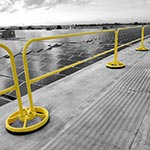
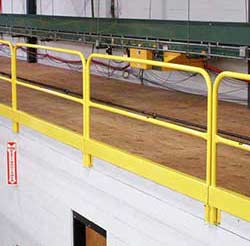
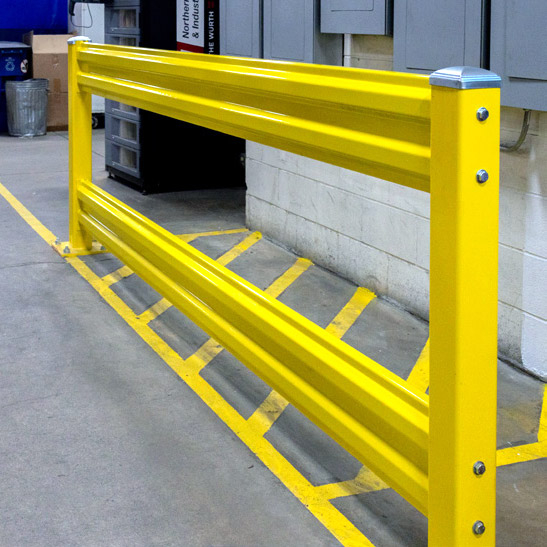
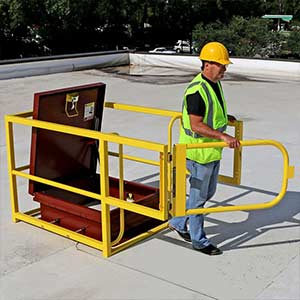
Roof Non-penetrating Guardrails
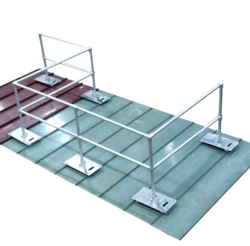
Install OSHA compliant guardrail fall prevention systems without penetrating the roof surface.
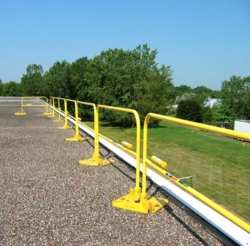
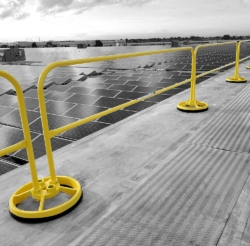
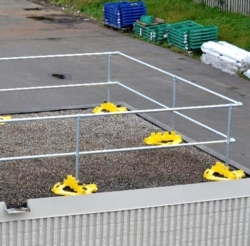

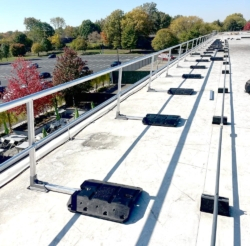
FINDING YOUR NON-PENETRATING GUARDRAIL SYSTEM
Narrow down your search for a Non-penetrating Guardrail System by following a simple step-by-step selection process. This will help you meet your OSHA fall protection standards and regulations, while selecting the best option for your requirement.
[wpforms id=”60466″ title=”false”]
Roof Fixed / Permanent Guardrails
Install OSHA compliant guardrails permanently, fixing the system to the application surface.
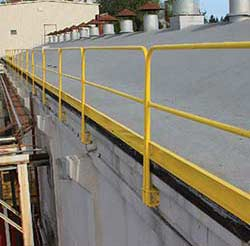
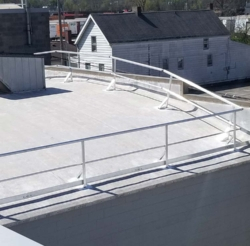
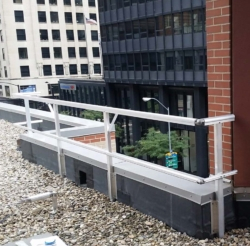
Loading Dock & Bay / Forklift Guardrails
Install OSHA compliant guardrail systems, non-penetrating and permanent options.
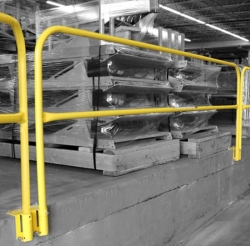
Steel Fixed Mounted
Non-modular System
Permanent / Fixed
Fed. OSHA/Cal-OSHA Compliant

Forklift Rated Guardrail
Modular System
Permanent / Fixed
Fed. OSHA/Cal-OSHA Compliant
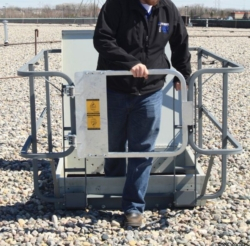
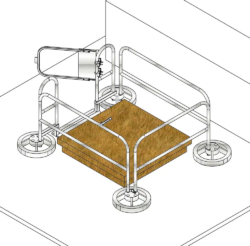
Roof Hatch / Skylight Railings
Install OSHA compliant safety railing around roof hatches and roof skylights with various attachment options.

Are guardrail systems OSHA compliant?
Yes. Properly designed and installed guardrail systems can help facilities comply with OSHA fall protection requirements for rooftop and elevated work environments.
What industries commonly use guardrail fall prevention systems?
Guardrail systems are widely used in manufacturing facilities, warehouses, commercial buildings, schools, hospitals, utility plants, distribution centres, and industrial facilities with rooftop access requirements.
What is a guardrail fall prevention system?
A guardrail fall prevention system is a passive fall protection solution designed to create a physical barrier around roof edges, elevated work areas, and fall hazards, helping prevent workers from accidentally accessing dangerous areas.
Where can guardrail fall prevention systems be installed?
Guardrail systems can be installed around roof edges, roof hatches, skylights, equipment access areas, mezzanines, loading docks, and other elevated work locations.
Can guardrail systems be installed on existing buildings?
Yes. Guardrail systems can typically be retrofitted onto existing commercial, industrial, and institutional buildings to improve rooftop safety and reduce fall hazards.
What types of guardrail systems does CAI Safety offer?
CAI Safety offers a variety of guardrail solutions, including freestanding guardrails, parapet-mounted guardrails, roof hatch guardrails, and skylight protection systems designed for different applications.
How do guardrail systems improve workplace safety?
Guardrail systems provide continuous protection without requiring workers to connect to personal fall arrest equipment, helping reduce fall risks and improve safety compliance.
What are the benefits of a non-penetrating guardrail system?
Non-penetrating guardrails help eliminate the need to drill into the roof structure, reducing the risk of leaks, preserving roof warranties, and simplifying installation.
How do I choose the right guardrail system for my facility?
The best guardrail solution depends on factors such as roof type, building layout, fall hazards, worker access requirements, and applicable OSHA regulations. CAI Safety can help determine the most appropriate system for your specific application.
Does CAI Safety offer non-penetrating guardrail systems?
Yes. CAI Safety offers freestanding, non-penetrating guardrail systems that help protect workers while preserving roof integrity and avoiding roof penetrations.